Showing posts with label Europe. Show all posts

Wednesday, 13 March 2019

Hampshire Flag

Flag of Hampshire (Flag Institute Facebook Page)
The flag of the traditional English county of Hampshire is officially official. The Flag Institute accepted the flag's registration in the UK Flag Registry yesterday (12/03/19). This leaves Herefordshire and Leicestershire as the only traditional English counties that don't formally have a flag. 
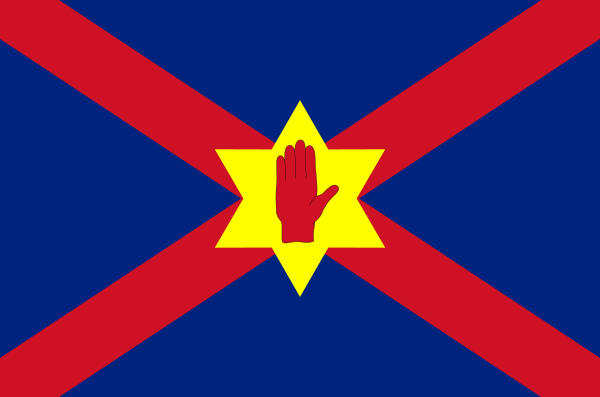
British County flags are becoming more and more popular, England and Wales are pretty well covered, however plenty of work still needs to be done in Scotland, as only four of the counties on the mainland have registered flags. I am naturally a little bit disappointed that the British County flags campaign leaves out Northern Ireland, although some might point out the Gaelic Colours of Irish Counties I have stated before that these are not county flags as they don't really exist outside the GAA, and are impractical as they are nearly all bicolours which are not even unique to that county! A place where flags are at best sensitive i think that Cross Community county flags(and other civic flags) would be advantageous in Northern Ireland as proved by the former flag used by the former Down District Council.
The Hampshire Flag is a red and yellow horizontal bicolour with a saxon crown on the top bar and the Lancashire rose on the bottom. It was conceived by Jason Saber with help from Brady Ells. The rose and crown are historic symbols associated with the county said to be traced to the Battle of Agincourt but arguably dates to the Earl of Lancashire who held estates in the county under Henry III. Red and Yellow colours were related to the historic uniform colours of the Royal Hampshire Regiment and are often still used by county sports teams.
The flag bears some resemblance to the county council arms granted in 1992 although it uses the St Edwards Crown rather than a historic Saxon one.
On a side note I've changed the name of the blog as I want to write on wider subjects that are of interest to me not just flags, although flags will continue to be a subject of this blog.

Friday, 18 November 2016

UK police badge redesigns Part 1

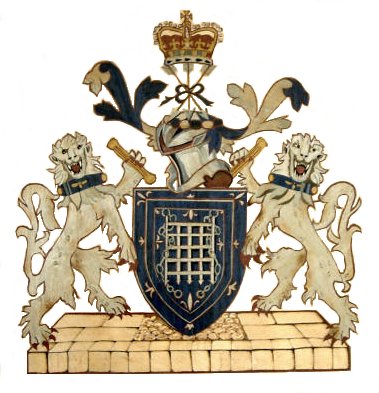
As far as British police badges go, most are pretty good, but I think some are rather generic. Most feature an eight pointed star generally (but not always) topped with a crown. In the centre of the star is a circular disk, with the name of the police force around it. Most have some sort of local or specific insignia in the centre but lots just have the Royal EIIR cypher. Personally I don't think the cypher is needed as the monarch and state is already represented by the crown. Here are just a few redesigns where I have replaced the cypher with something to represent the local area or region, starting with the largest police force in Britain,London's Metropolitan Police Service.
It uses the Westminster portcullis which appears on the Met's coat of arms.
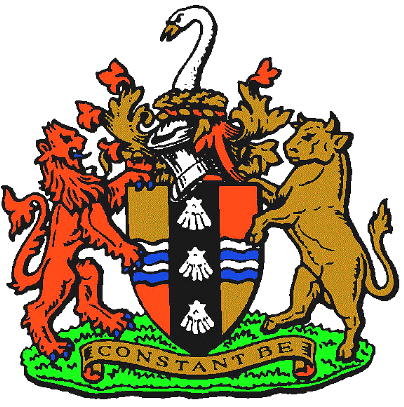
For the Bedfordshire police I used the Bedfordshire coat of arms:
The Cumbria police badge features the white Grass of Parnassus flower found on both the flag of Cumberland (often mistaken for Cumbria) and the Cumbria flag.
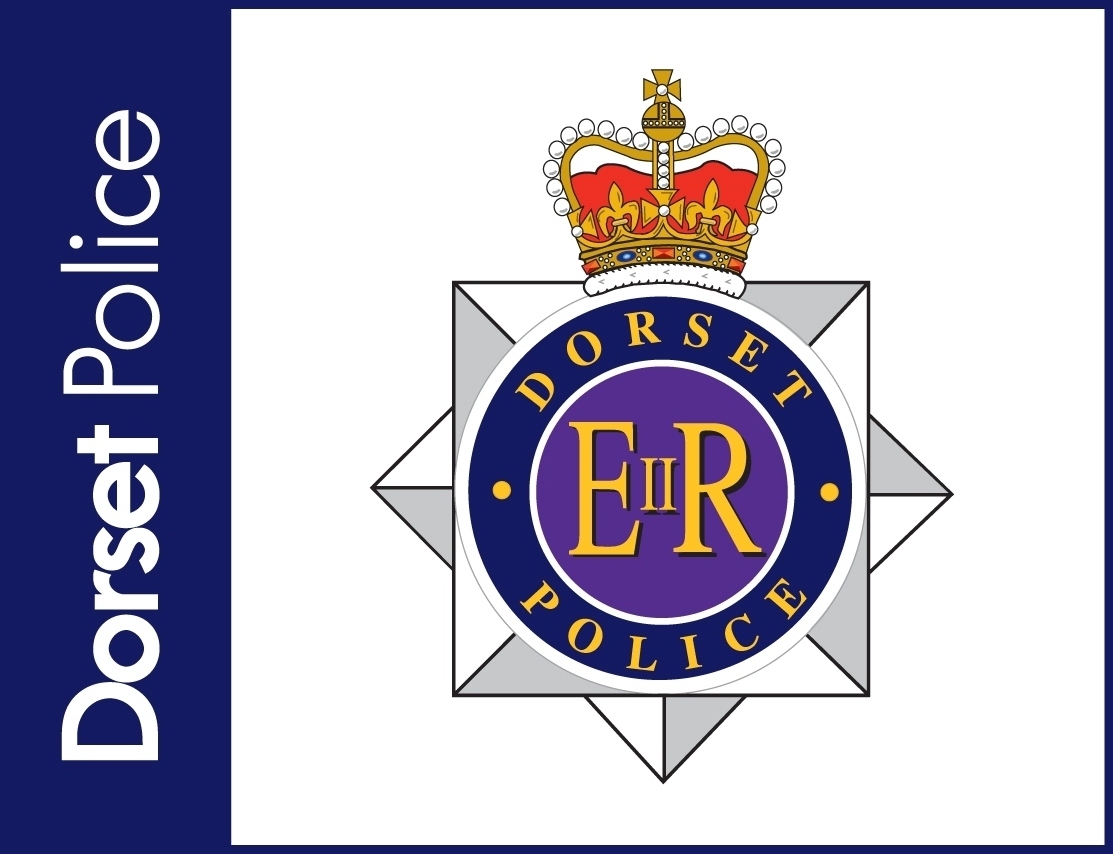
Dorset Police badge design features a Dorset flag shield:
Likewise the Gloucestershire police badge features a county flag shield:
The Gwent police badge is slightly different, it is based on the Gwent banner, but with some slight differences mainly the dragon to distinguish it as this police force's jurisdiction expands beyond Monmouthshire. I also kept the Welsh text on the badge:

the Humberside police badge is also based on a coat of arms but differs slightly:


The Merseyside police badge redesign features three mural coronets from the Merseyside flag:


The redesign for the Nottinghamshire police badge featured the shield from the centre of the Nottinghamshire flag:
However I realize that the figure represents Robin Hood and felt it might be a bit ironic for the badge of law enforcement to feature an outlaw! So I also offer an alternative featuring the cross from the flag:
Other badge redesigns are that of the Ministry of Defence Police (not to be confused with the Royal Military Police which is a corps of the army)  and Her Majesty's Inspectorate of Constabulary whose job is to police the police.
The MoD police badge redesign simply features the tri-service emblems of the swords (army), anchor (navy), and eagle (air force):
HM Inspectorate of Constabulary's badge redesign features a shield bearing scales of justice, the royal cypher and an olive wreath. However I consent that in this case it might be appropriate to just use the royal cypher as is done in the present badge. 
But perhaps the law enforcement organisation in need most of a badge redesign is the National Crime Agency (NCA) the British equivalent of the FBI. Although their current logo might work well as a logo, it doesn't really work as a badge, so this is my proposal:

It features the eight pointed star common to nearly all UK police forces, the crown and the royal arms to demonstrate its national jurisdiction. 


Tuesday, 19 April 2016

Union of Commonwealth Realms

Before I start this post I would like to apologize for my lack of recent posts, this is due in part to research and study for a print publication I am currently working on, and it is taking up the greater part of my spare time, so post might be few and far between I'm afraid, but I will try to put one up every now and then.
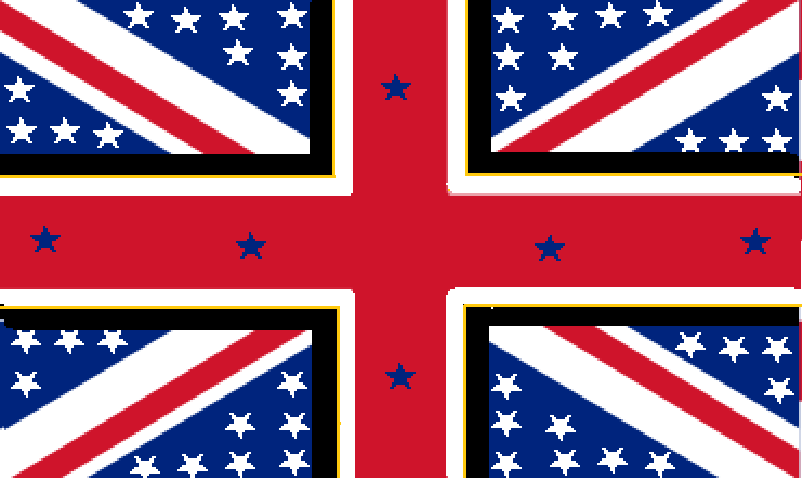
Currently British politics is dominated (with a slight exception of regional elections in Scotland, Wales and Northern Ireland) by the upcoming referendum on the United Kingdom's membership of the European Union. As usual I am not advocating any political opinion, but I was intrigued when I seen a hypothetical scenario. The scenario was the UK leaves and forms a free trade and movement zone, between the UK, Canada, Australia and New Zealand. with certain joint institutions, rather similar to the European Union but more anglocentric. I even seen a potential flag for such a union by Zach Elsbury:
  It evokes the British ensign which not only includes the Union Flag but is the same style of flag used by Australia and New Zealand with a red field for Canada (the former flag of Canada was a red ensign). Its defaced with a shield quartered with the national plants of the four nations.
Inspired by this design I thought of having ago at a similar flag, with more emphasis of an international organisation rather than a colony. My first design was this:
Still inspired by an esign which has elements all of the four member states flags have in common,The Union Jack has official status in Canada and the UK, and appears on the Australian and New Zealand flags. it features the gold wreath and a globe. The roses form part of the cypher which is in the centre of all the commonwealth royal standards outside the UK, including those of Canada, New Zealand and Australia. The globe is from the flag of the Commonwealth of Nations. This flag is timeless as it has no direct symbolism to any individual state, meaning if a member leaves or other realms like Tuvalu or Jamacia join the flag doesn't require changing. However thinking the globe might look a little like a mock up British Empire flag, I decided to replace it with a crown, the symbol of the monarch which share:
I like this better as it is a simpler design and looks a little less cramped.

Sunday, 13 September 2015

Fresh Flags: Northern Ireland, Republic of Ireland and Ireland

I was directed to this website via Facebook and thought I'd share it. Its principally concerned with a new Northern Ireland flag, but also has ideas for a new Republic of Ireland flag, and All Island flag for sporting events and cross border bodies.
The website FreshNI can be found here.
I would like to share the designs, which are interesting and generally rather good, and offer some comments.

Northern Ireland

First off is the Northern Ireland (or Ultonia from the latin for Ulster as the website thinks is a more distinct name, I will continue to use Northern Ireland, Republic of Ireland and Ireland for the island so as not to overtly complicate things) flag proposal:
All these designs are attributed to Palomca, who is responsible for a number of NI flag designs, but
this is what he considers his best. It is rather good in that it is simple and not at all complicated, with minimal colours. The only suggestion I would make is to colour the central hexagon (a reference to both the six counties and the Giant's Causeway) possibly gold (red and gold are colours associated with the province of Ulster):
The change is minimal but it really emphasizes the central emblem better, but that is only my own personal tastes.
As well as a flag a coat of arms is also proposed:

As seen in the image its really a modified variant of the former Northern Ireland coat of arms but with the design changed on the shield, and a few other modifications. I particularly like the compartment with the arrangement of six shamrocks and six flax flowers. I like the Ulster-Scots reference in the flag staffs, something I have also alluded to in one of my NI coat of arms designs, although more directly with a St Andrew's Saltire:
too much! My design
The supporters in my design featured a lion representing the British identity bearing a St Andrew's Cross for the Ulster-Scots, and an Irish elk with the historic green harp flag representing the Irish identity, of course both supporters are working together to support the shield. However my arms are very complicated with too many different symbols. Where as the above mentioned proposal is rather simple which works. I am not quite sure with replacing the cross of de Burgh with the lion rampant (a royal banner) however the fact that it is not the complete banner but the lion only alleviates my concerns around using a royal flag. Originally my arms had a motto in both Irish and Ulster-Scots but it is probably better to leave such text out for political ease .
Overall I approve.

Republic of Ireland

It is suggested that the Republic of Ireland change its flag to a gold saltire on green field defaced with the harp from the state coat of arms:
The rational behind this is that the tricolour is not a distinctive design the same way the stars and stripes or Union Jack is. Where as this is, change the colours to black and white and this is still a recognisable flag.
At first I was sceptical about a gold saltire. I have seen various flag design including a saltire to mimick St Patrick's cross, including blue, white and green crosses. This is not really how heraldry works, and I was fearful that this flag might be another example of these poorly planned designs. St Patrick's Cross specifically a red saltire. 
However this design is a rather effect combination of symbols, including the harp, the tricolour and St Patrick's Cross. The gold colour of the saltire comes from mixing the orange of the tricolour with the red saltire to make gold, which fixes the problem of a meaningless saltire. 
Green and gold are also distinctive colours in Irish nationalism.
The only problem I have is that the coat of arms in the middle belong to Leinster. The Irish arms are a blue shield:
I would change the colour again which emphasises the central emblem and it keeps the colours to a minimal of three.

Ireland

There is no universally accepted formal flag flag for the island of Ireland. This has lead to sporting organisations and other all island and cross boarder bodies using a variety of flags often unique to their organisation.  
According to the website  Palomca's main influence in this design were souvenirs from the Catholic Eucharistic Congress of 1932, when they celebrated 1500 years since St Patrick brought Christianity to Ireland. Both feature St Patrick's Cross but on one the field is green, and he simply improved upon it by observing the rule of tincture:
What I really like about this design in conjunction with the other two, is that it looks like a combination of the Northern Ireland and Republic of Ireland flags. I don't know if that was intended but nonetheless its an effect I really like, and if these two flags were adopted would make this design a perfect all island flag.
  

Ulster-Scots

The design of a Ulster-Scots flag features a St Patrick's Cross combined with that of St Andrew, a theme that has appeared on other flags from Ulster. Being from that proud stock of people myself I am sympathetic for an ethnic flag. The design in question also features a red hand of Ulster and red lion of Scotland:
I think the positioning of the red hand and lion is a little odd, personally I would place them on the top and bottom quarters so that they have a more central position:
 I personally think this is a better variant of the design but I still think it looks odd. The combination of Scottish and Ulster symbols is not an easy one, and the flag would look quite distinctive without the hand and lion so I would suggest dropping them and sticking with the saltires. Or if you want to reinforce the Ulster symbolism just drop the lion. I think most Ulster-Scots my self included have a deep attachment to the red hand (which is odd if one considers its history) that we don't have to the same degree for the lion rampant.  
Well thats it, please feel free to comment and make sure you visit the website for yourself. Many thanks to Palomca for allowing me to post and share his material. 

Friday, 14 August 2015

National ID Card

A thought that occured to me listening to the radio yesterday. They were debating if there should be a British national identity card, like in other countries. Now those against said it would be a move towards totalitarianism, where as those for it pointed towards usefulness at home and abroad, as well as a convenient nationally recognized form of ID for those who don't have a drivers licence or passport. Not quite sure where I stand on the debate, but if there is one, this is what I think it should look like:
It has the patterned background to combat forgery, and "United Kingdom" in bold text in the header. For those who live in the Dependencies or Overseas Territories the "of Great Britain and Northern Ireland" could be replaced with "Crown Dependencies & Overseas Territories" To the left is "United Kingdom" written in Cornish, Irish, Lowland Scots, Ulster Scots, Scot Gaelic and Welsh, similar to the first page of the UK passport (except Cornish, Scots dialects and Irish) except it simply reads United Kingdom rather than the full title.
Some people talked about ID cards in other countries including eye colour, weight, hight etc. I think thats a bit over the top and that all that is really needed is the information on your passport, principally you name, gender, date of birth, nationality and home town, with the addition NI number and NHS number.m
The visual aspects naturally include a photograph along with the national flag and the variant  royal coat of arms used by the government.
The back of the card could look like this:
A crimson background similar to the passport cover. With UK national ID card in bold clear text, and information stating its government property and should be handed into the authorities if found. A coloured variant of the Royal coat of arms in the centre.
Please Feel free to comment

Monday, 18 May 2015

EU Military flags

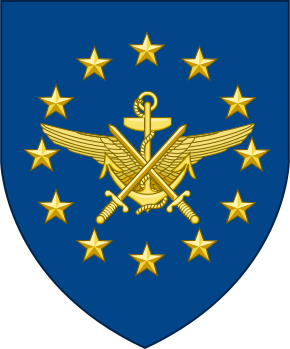
Insignia of the European Military Staff
The flow of migrants across the Mediterranean to Europe from North African and Middle Eastern countries, particularly Libya. and the contempt for Human life shown by the people traffickers has caused the European Union to take action. An EU naval task force has recently been agreed to combat the traffickers. European warships including British vessels are already in the Med to assist in the humanitarian effort.
While the European Union's primary function is not as a military alliance, it has a common Security and Defence Policy which maintains a raid reaction force called European Union Force (EUFOR), which has been deployed in various countries in and outside of Europe. This has led to some interesting heraldic insignia of the various military alliances and operations within the Union, see here. 
Unlike dedicated military alliances like NATO, the European Union does not have dedicated flags for military use so here are my proposals,

Naval Task Force

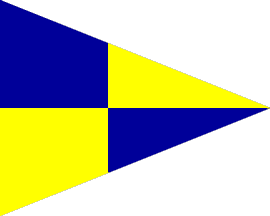
While some Fisheries protection vessels to fly a common pennant and ships that are part of a European group (for example the anti-piracy group protecting ships traveling between Europe (via the Suez Canal) and Africa and Asia)  to fly an EU flag alongside their national ensign, there is no dedicated pennant, or command flags like in NATO. So here is the EU naval pennant, for use of ships on EU taskings:

Its a simple system of shapes a ship in command of a squadron would use a swallow tailed variant of the flag:
The actual EU flag being reserved for the flagship. 

Land Forces

Land forces generally do not use rank flags the way ships do anymore but here is a similar system:
A swallow tailed flag for the commander in chief
If it is a big force with more than one Division, the blue and yellow variants for Division commanders:
The number or letter of the division could be placed in the centre of the stars.
A Brigade Commander could use a triangular variant, again an insignia could be placed in the centre:

As for Arm patches a simple circle of stars with the nations initials, as used on EU number plates ie D for Germany, NL for Neatherlands, E for Spain, F for France etc. In this case UK for British troops:
However as most armies tend to wear flag patches, it renders the need for the patch to identify nationality as pointless, so a standardised European patch might be better:
This intern got me thinking:

Air Forces

What about aircraft roundels, the flags of the sky. I do think it is important to keep the national roundel, but the aircraft could easily be marked as part of a European force by surrounding this with the EU stars for example German and French roundels for EU missions:
German roundel 

French roundel
This was just a quick post but let me know what you think?

Friday, 9 January 2015

Je Suis Charli flag design

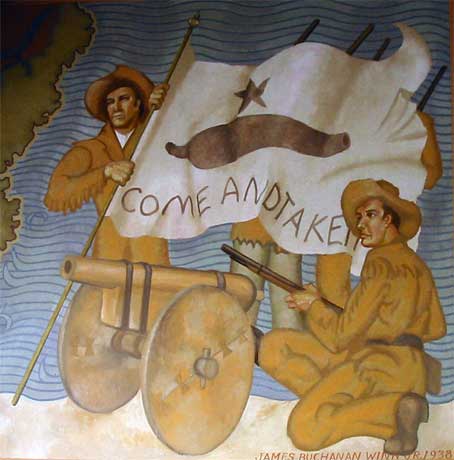
This is my response to the terrible events in France. I decided to make a special flag in defiance of the attacks on civil liberty in that country. It is based on the flag used by the Texans at the Battle of Gonzalas.


Instead of a cannon it has a pencil symbolising freedom of speech and expression, it is also in the French colours representing national unity of all the people of France. The "Come and Take It" slogan is now the defiant "Je Suis Charlie" The star remains unchanged and still represents sovereignty and freedom. 

Tuesday, 16 September 2014

Anglo-American Union

This is the result of a suggestion from a friend on Facebook of a possible union between the UK and USA. The basic scenario that the United Kingdom, whose (global influence has declined with her empire) and the United States (who is expected to lose her superpower status in the future), unite as a single state to reaffirm their old positions in this unstable world  and perhaps to prevent  China or even Russia becoming the next superpowers. The flag used in this post was the 'Grand Union Flag' or 'Continental Colors.'  The thirteen red and white stripes with the pr-1800 Union Jack in the canton often regarded as the first American flag, used during the first year or two of the US war of independence, before independence was the official aim of the Continental Congress.  I suggest a design based on that flag:
It features the modern Union Jack and all 50 stars of the current United States. However I decided to improve on this, I increased the number of stripes to 17, to represent to original 13 colonies and former home nations and added the cross of St David of Wales to the Union Jack so that all British home nations and US states are represented equally. I also alternated the stripes to red, white blue, white etc, which I personally think compliments the colours in the canton better:

The problem with this is that it may be confused with the flag of Hawaii. so perhaps red and white stripes are better:
Alternatively one could be a civil flag and one a state flag, to say distinguish naval vessels, similar to the red, white, blue ensign system used by the UK & some commonwealth countries.
As far as naval jacks go I also have two designs, the first one is simply the canton design used by itself:
The other is a Union Jack defaced with a rattle snake with the text "Don't Tread on Me". A little combination of the current British and US naval jack:
Again one could be for naval use and the other for civil used, or for auxiliaries and support ships. The aircraft roundel could be the US roundle used in the inter war years and beginning of WW2 as this is also similar to the British red, white and blue rings:
The national coat of arms is quartered with the British and American coat of arms. The British arms are quartered with the ancient arms of England, Scotland, Ireland and Wales, where the American Arms feature a blue chief with red and white stripes:
I am operating here that both UK and USA would literally be up in arms if they gave up complete sovereignty, and some some sort of arrangement has been made where the American leader pays symbolic homage to the monarch who in turn promises to uphold American Democracy. thus keeping both constitutions intact. Alternatively a more anglicised version might be:
I also thought the supporters could be an American continental soldier and British 'red coat' the synbolism being obvious, but decided to stay with the lion and eagle, but perhaps the soldier supporters could be used in military heraldry, a typical seal might be:
Who knows what the future holds, although I don't think anything like this could happen in my lifetime, but still fun to think what if. Feel Free to comment.