With the sad passing of HM Queen Elizabeth II last month and the accession of HM King Charles III to the throne there will be some changes to royal symbols across the
United Kingdom as well as the
Commonwealth Realms. Now that the mourning period for the late Queen has passed I think it is appropriate to take a look at some of the heraldic changes. First and perhaps the most important as this will affect all Royal heraldry outside of Scotland is the crown (within Scotland the ancient
Scots Crown is used on Royal heraldry). The
St Edwards Crown we are all used to seeing on badges, cyphers, coats of arms and other symbols will change to the
Tudor Crown. often referred to as the 'King's Crown' this was the crown used by George VI, Edward VIII, George V, and Edward VII. Now it was not a certainty that the crown would change, the choice of crown is up to the King. But when the
new cypher of the King was published it featured the Tudor Crown which seems to confirm that the Tudor Crown will be used from now on.
I confess I was slightly surprised at this as I was half expecting the King to decide to keep the St Edwards crown. Both out of a sense of constancy and practicality as this will be a major change in branding across the Commonwealth, affecting everything from military cap badges to post vans, and courts to passports.
Commonwealth Standards
Another change will be Royal Standards. While the Royal Standard of the UK will remain the same for it is simply a heraldic banner the same is not true of those used in the some of the Commonwealth Realms. The personal flags that the Late Elizabeth II used in Canada, Australia, New Zealand and Jamaica all made use of the device used on her personal flag. This was a crowned letter 'E' within a wreath of roses. This was something a lot of heraldry fans disliked as the banner of arms by itself represented the monarch. Perhaps now that we have a new King this will be dropped from the Royal Standards of the Commonwealth Realms.
If not though these are my proposals for those realms in which the King has his own unique standard. In all these cases I put the flag in an ermine border. My thinking here is that the flags of members of the Royal Family be distinguished by an ermine border. Whereas the Governor General could use a banner without an ermine border. I've also used the full cypher as a crowned 'C' will look an awful lot like the monogram of the Queen Consort. I've deliberately chosen not to use the roses used in the personal flag of Queen Elizabeth II,
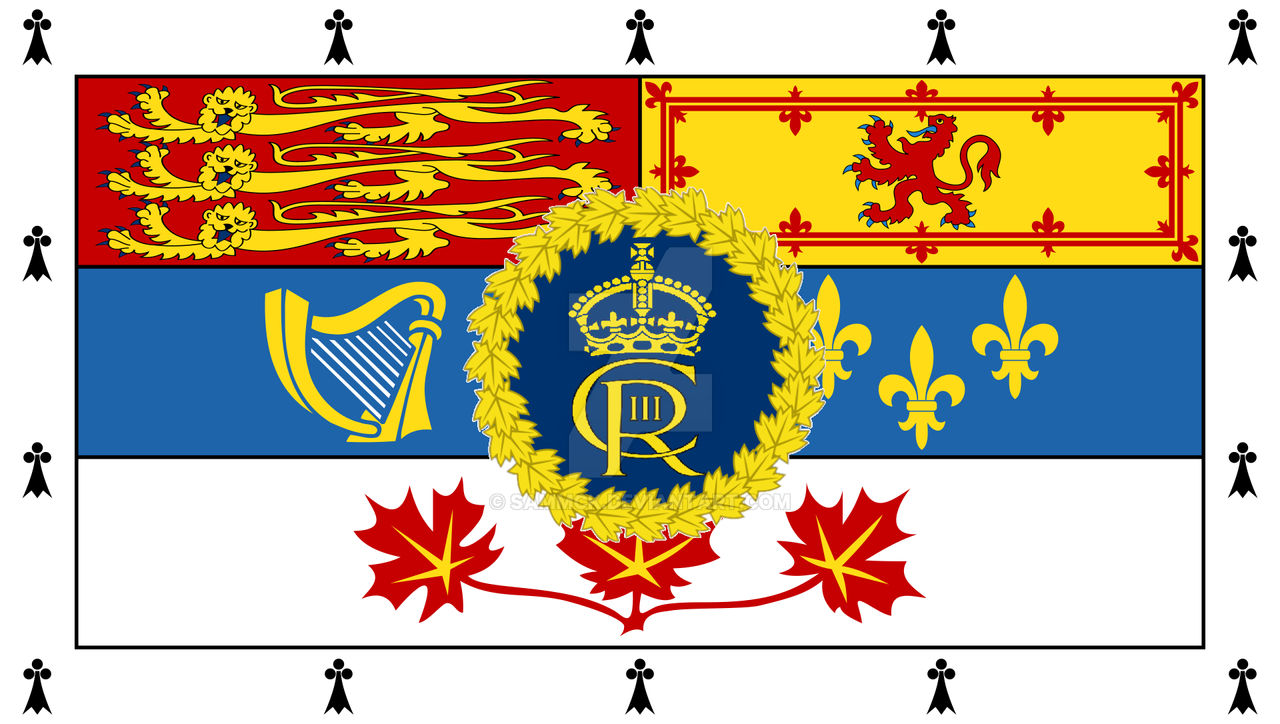 |
Proposed King's flag for Canada.
Like the flags of other Royal Family members the cypher is within a garland of maple leaves |
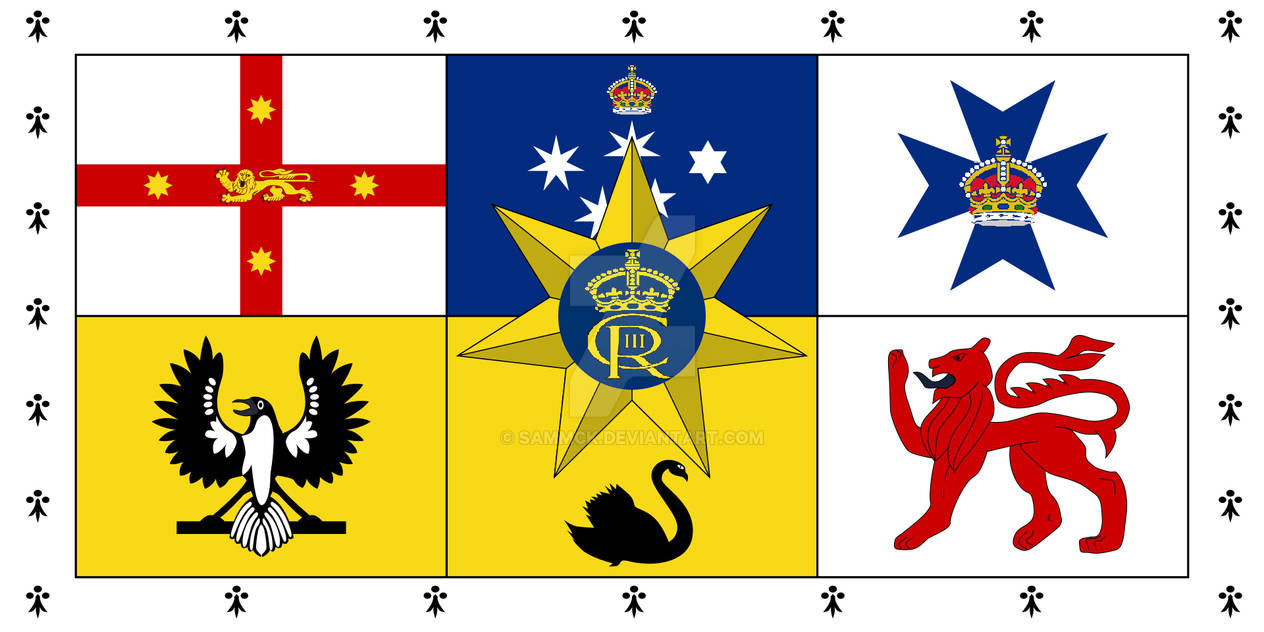 |
| Proposed King's flag for use in Australia |
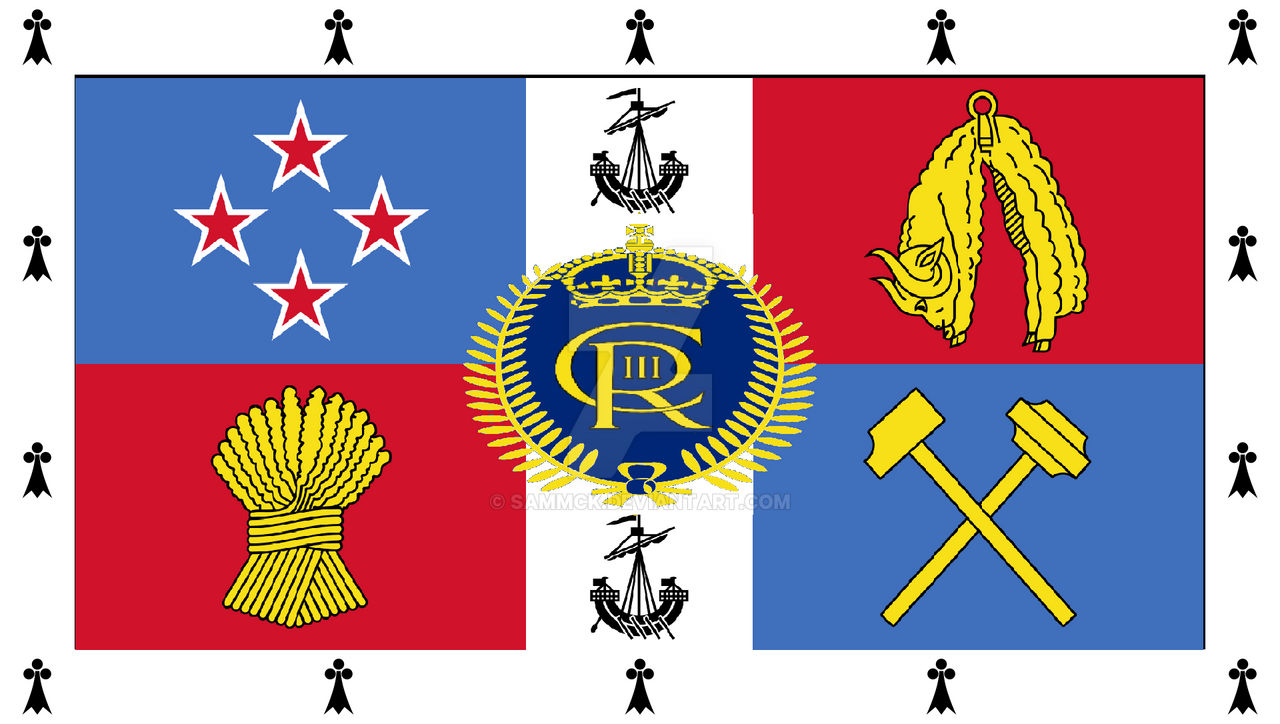 |
Proposed King's flag for use in New Zealand
note use of ferns, around cypher |
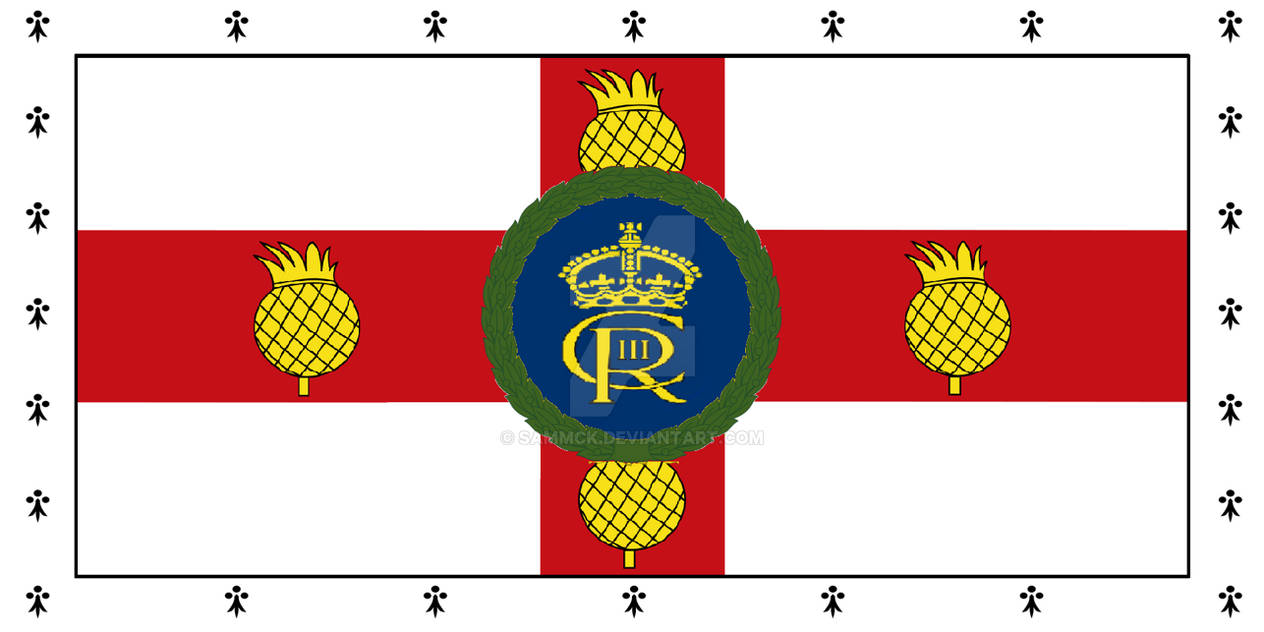 |
| Proposed King's flag for use in Jamaica |
As head of the Commonwealth Queen Elizabeth II used a flag that was designed to represent her as a person rather than the monarch of a realm or nation. As Prince of Wales never used such a flag so I am not sure he will feel the need to use one as King. If he does I thought of one on similar lines to that of his mother.
It is simply a blue flag with his cypher. I didn't use the roses his mother used. Given this is more personal I thought a rope circle symbolising his naval background might be more appropriate.
The Queen Consort
Another change is that as well as a new King we have a new Consort (the title Queen Consort is used in this post to avoid confusion with the Late Queen and because although used in the past at the time if writing it is unclear if the title 'Queen' will be used). The consort of the monarch is the only royal spouse entitled to use their own standard (other spouses use the Royal Standard for
members of the Royal Family without a personal standard). For Queen Consorts this is a banner of their coat of arms which is the arms of their husband impaled with either their own or their father's arms. Hence the Queen Consorts Royal Standard will be the Royal Arms impaled with the arms of the Shands of Craig, Aberdeenshire.
Will there be seperate flags for Commonwealth Realms? It is probably unlikely that the Queen Consort will travel to any of the Commonwealth realms without the King and so negating the need to use a unique flag. However I've had ago at throwing together some proposals. First is is the Shand arms impaled with the Royal Arms in right to the appropriate Commonwealth Realm.
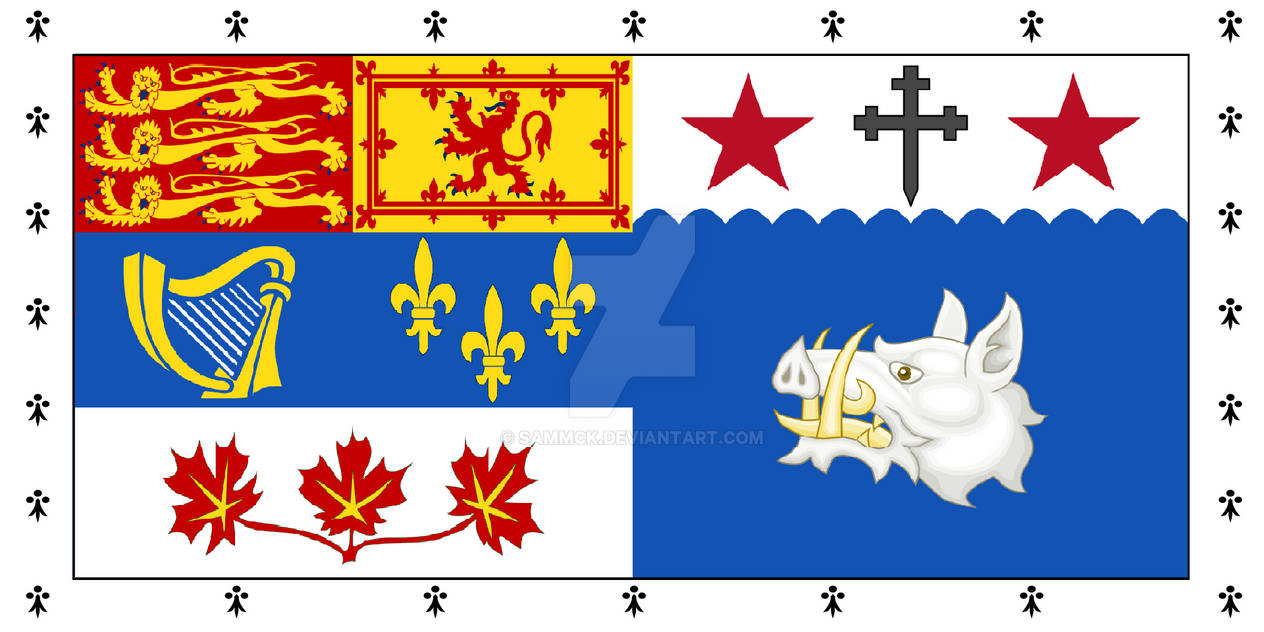 |
| Proposed Queen Consort's flag for use in Canada |
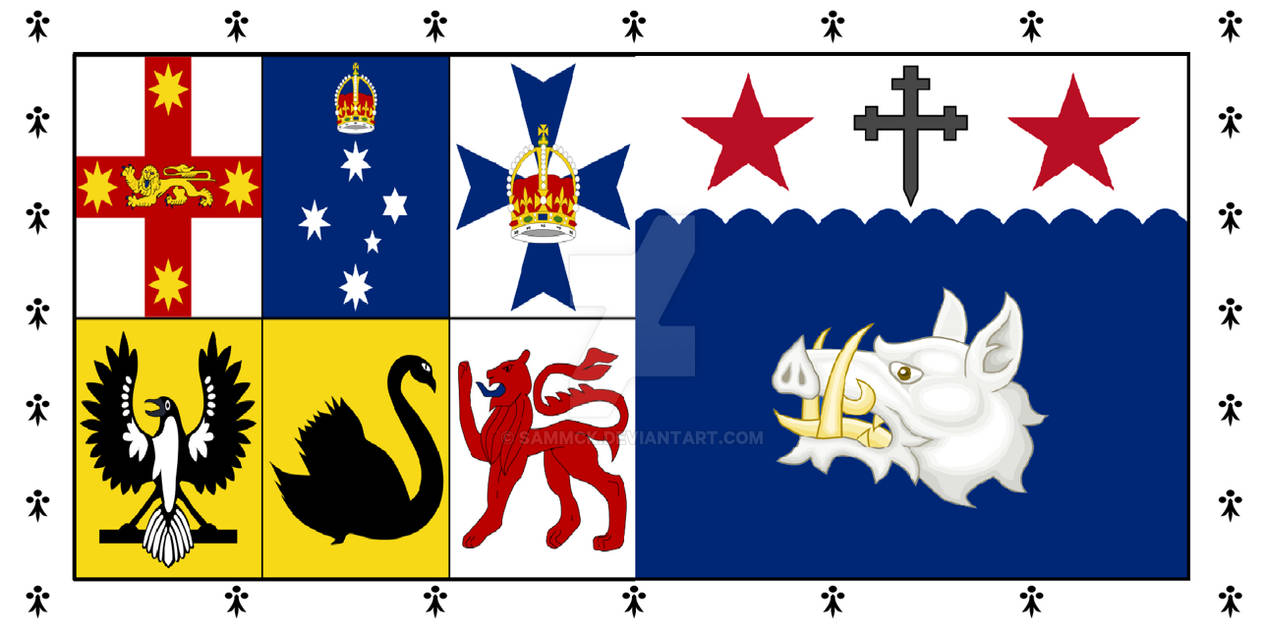 |
| Proposed Queen Consort's flag for use in Australia |
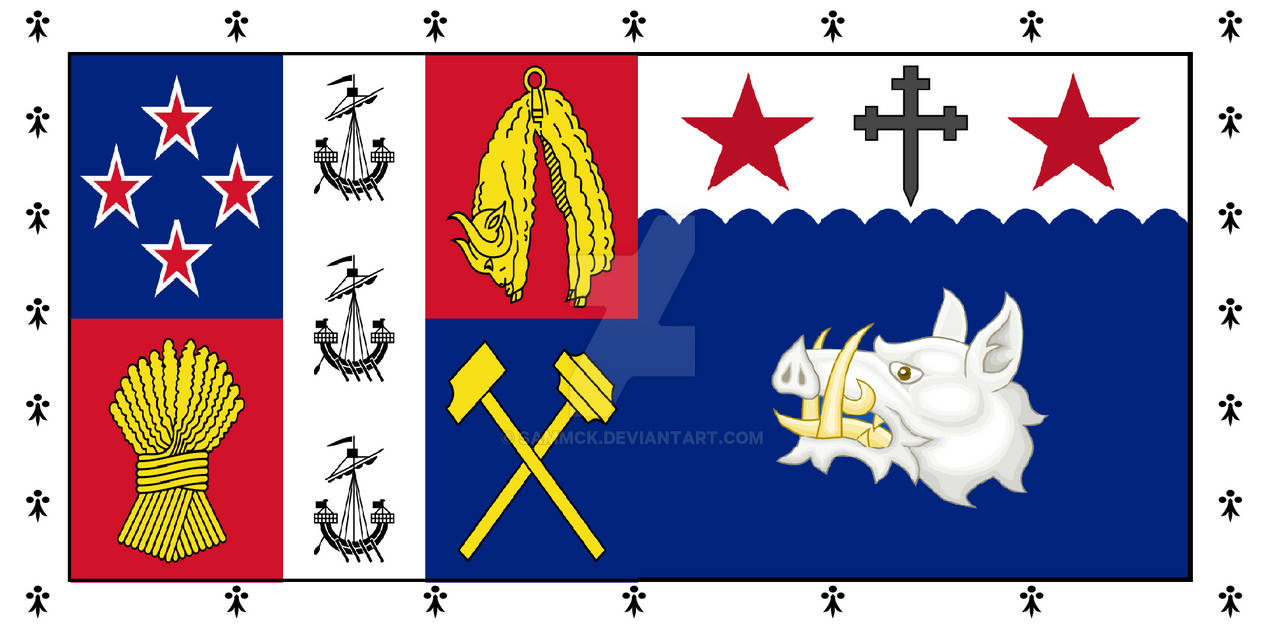 |
| Proposed Queen Consort's flag for use in New Zealand |
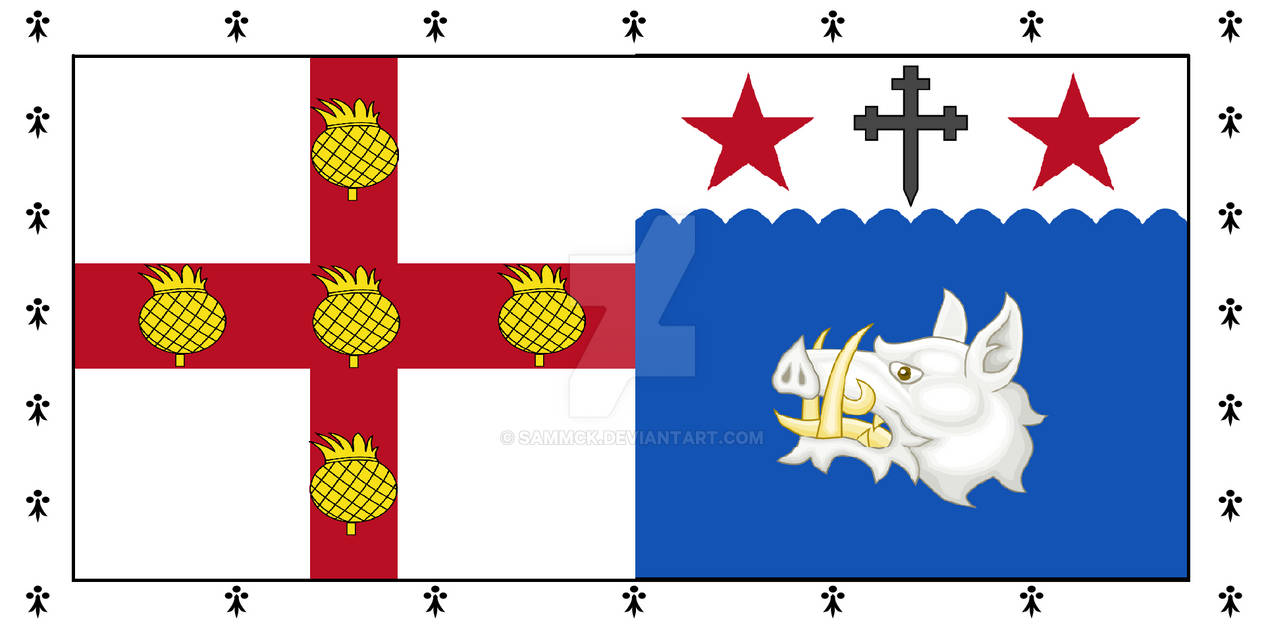 |
| Proposed Queen Consort's flag for use in Jamaica |
Another option is to use the relevant Royal Standard and replace the King's Cypher with
Camilla's monogram however I think that would be indistinguishable from the Royal Standard itself.
Personally I think this shows the merits of not defacing the banners with cyphers.
Other Members of the Royal Family
Something that I haven't heard mentioned or read anywhere is what this means for the coat of arms of the children of the King.
Traditionally children of the Sovereign and the first heir apparent use the Royal Coat of Arms differenced with a label of Three Points and other grandchildren of the Sovereign use the Royal Coat of Arms differenced with a label of five points. The points of the label being differenced by a heraldic charge usually a charge associated with the maternal line. According to Wikipedia (so take it with a grain of salt) HRH Prince William of Wales is already using the Royal Coat of Arms differenced with a label of three points.
This is not the arms used by previous Princes of Wales, which had an inescutcheon of the
arms of Wales. The King was quick to announce that Prince William will become the Prince of Wales and he is already being referred to by that title. However he has not yet been formally invested as Prince of Wales or been granted any amendments to his coat of arms and that is not likely to happen until after the coronation. So we will probably see the inescutcheon granted along with the various
badges and
arms of the prince of Wales and Heir Apparent either before or immediately after the investiture of the Prince of Wales.
 |
Arms of Prince of Wales 1917-2022
Credit: Sodacan, CC BY-SA 3.0 |
Another change could be in the coat of arms of the Duke of Sussex. Presently Prince Harry uses the Royal Arms differenced with a label of five points with the outer and centre point charged with an escallop (reference to the Spencer Arms). A label of five points is of course traditional for a grandchild of the Sovereign, but the Duke is now a child of the Sovereign. So this could change to a label of three points. In such a case I would propose charging the outer labels as a single escallop on the central point was used by his brother.
 |
| proposed arms for Duke of Sussex |
These changes would of course be reflected on the arms of their spouses.
Seals
The royal seals of the United Kingdom are four things that will change. The royal seals are affixed to legislation when they receive Royal Ascent, these are the
Great Seal of the Realm (used for Acts of Parliament), the
Great Seal of Scotland (used for Acts of the Scottish Parliament), The G
reat Seal of Northern Ireland (used for Acts of the Northern Ireland Assembly) and the
Seal of Wales (
Acts of Senedd Cymru). When a monarch passes away new seals are made and the old ones are decommissioned by being defaced by a hammer. All the seals feature an image of the monarch either enthroned or on horseback with heraldry on the reverse.
This is unlikely to change, although in the cases for the Northern Ireland and Welsh seals it would be a good opportunity to update the heraldry. Under George V and George VI (and presumably Elizabeth II)the reverse of the Great Seal of Northern Ireland featured royal arms with an inescutcheon of a red cross of gold field from the
arms of Ulster. I would propose a variant of the Royal coat of arms with the heraldry of the Kingdom of Ireland:
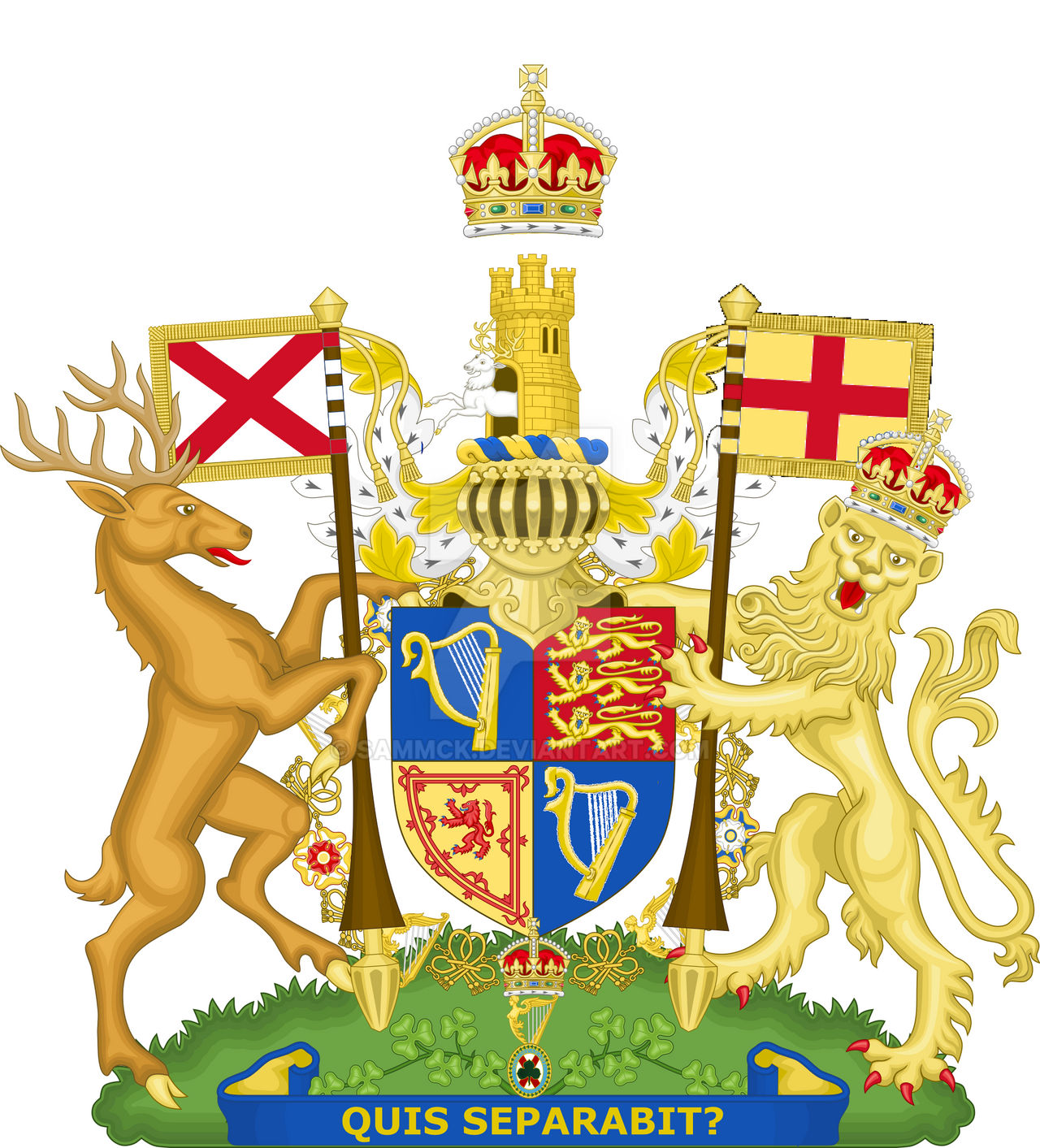 |
| proposed NI variant of Royal Coat of Arms |
It features the Irish harp in the first and fourth quarters. The historic crest of Ireland on the hem and the Order of St Patrick as well as a compartment of shamrock. The supporters feature an Irish Elk and British lion bearing the flag of St Patrick and the aforesaid red cross on gold field.
Something similar could be done on the Welsh Seal. The arms of Wales could be given dragon supporters and placed on the reverse allowing the image of the monarch to take up the entire obverse.
.svg/800px-Coat_of_arms_of_the_United_Kingdom_(1837-1952).svg.png)







.jpg)


