I am pleased to announce that my book Northern Ireland Flags & Emblems is now for sale and can be purchased here.
The book features 184 quality A4 pages in full colour, with plenty of pictures and illustrations, some of which are the result of my own work. It covers national flags, royal flags, government and civil emblems, flags in sport, historic flags, some of the flags used in consolidarity, the flags used by various paramilitary groups both Loyalist and Republican and even the flags seen in the waters around the province.
Some examples:
This is a print on demand book, however I am also working on an e-book version, which when completed I will update on here.
this is as far as I am aware the most complete collection of information of flags and emblems in regard to Northern Ireland.
The book can be purchased here and prints in 3 -5 business days
Hi all I am pleased to be back blogging, I have finished the print publication I mentioned and it is currently being submitted to potential publishers, I will of course update the blog on progress.
The world has today been focused on the result of the American presidential election, but there was another significant referendum in the United States yesterday that went largely unnoticed. The capitol Washington DC voted in a referendum to become a state. Although this of course has to be approved by congress, which may or may not happen. Washington DC is not part of a state so has no representation in Congress. This video helps explain:
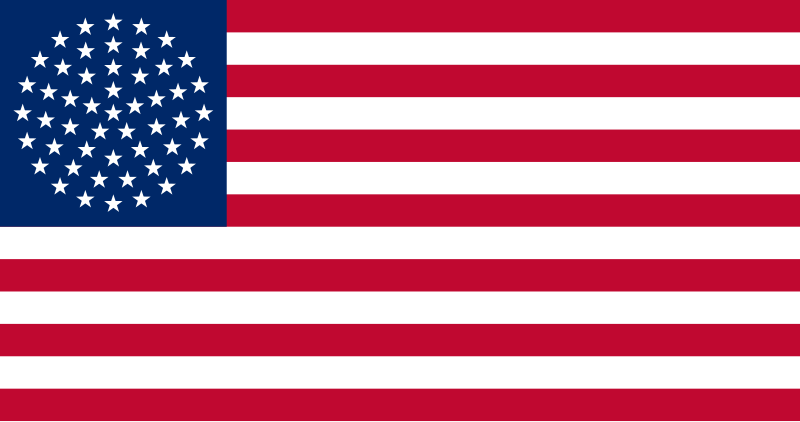
If this application for statehood is approved it would make Washington DC the 51st state of the United States of America. If American tradition is followed then a star would be added to the canton of the US flag. Since 1960 the US flag has had an even and symmetrical 50 stars which an extra star would mess up, so what patterns could be used? The Puerto Rico statehood movement use a circular design, which harks back to the Betsy Ross design of the early US flag, except it now forms a sphere.
The problem with this is that some people don't think that there should be a star in the centre of the formation, as this would imply that some state or states are more important than others rather than equal.
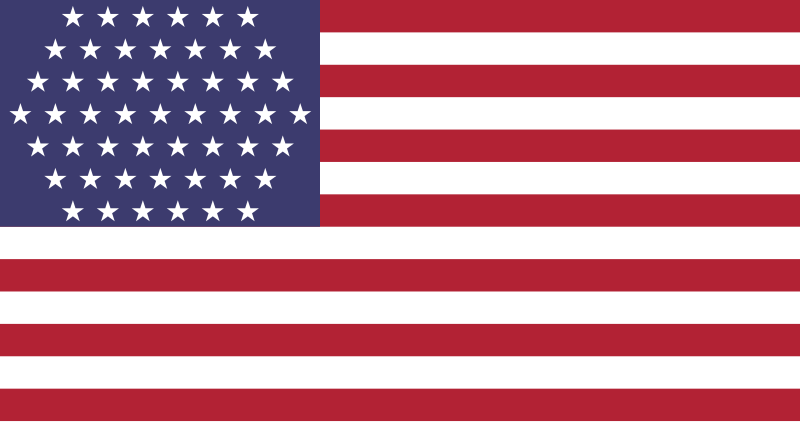
There are two other drafts that have been suggested, one with a "checkerboard" pattern
Another draft has a hexagonal pattern:
I personally think this looks odd but perhaps thats because I am so used to seeing a symmetrical canton.
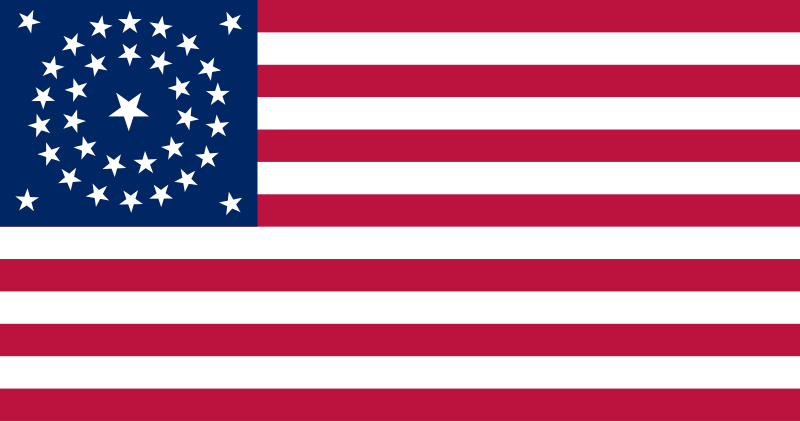
I like the Puerto Rico design. I think it tries to go back to the modern US flag roots of the Betsy Ross flag, however I think they went about it wrong. The hollow circle of stars a symbol of unity the world over possibly inspired by early American flags, notably in the European and African Union Flags. So my idea reverts to the hollow circle. Of course 51 stars is too many to fit into a single circle, but I was inspired by a variant of the 34 star flag (1861-1863) that made use of two circles:
This is my design for a 51 star Betsy Ross style US flag:
It keeps a symmetrical pattern, and all the stars are equal. In order to accommodate all the stars I had to make them a bit smaller and expand the blue canton so it now touches 9th red stripe instead of the 8th white stripe. As the hollow circle is a symbol of unity which is what the USA is probably in need of now I think the change is worth it and I think it works rather well, at least until Puerto Rico or another territory becomes a state and we need a 52 star flag lol.
I was directed to this website via Facebook and thought I'd share it. Its principally concerned with a new Northern Ireland flag, but also has ideas for a new Republic of Ireland flag, and All Island flag for sporting events and cross border bodies.
The website FreshNI can be found here.
I would like to share the designs, which are interesting and generally rather good, and offer some comments.
Northern Ireland
First off is the Northern Ireland (or Ultonia from the latin for Ulster as the website thinks is a more distinct name, I will continue to use Northern Ireland, Republic of Ireland and Ireland for the island so as not to overtly complicate things) flag proposal:
All these designs are attributed to Palomca, who is responsible for a number of NI flag designs, but
this is what he considers his best. It is rather good in that it is simple and not at all complicated, with minimal colours. The only suggestion I would make is to colour the central hexagon (a reference to both the six counties and the Giant's Causeway) possibly gold (red and gold are colours associated with the province of Ulster):
The change is minimal but it really emphasizes the central emblem better, but that is only my own personal tastes.
As well as a flag a coat of arms is also proposed:
As seen in the image its really a modified variant of the former Northern Ireland coat of arms but with the design changed on the shield, and a few other modifications. I particularly like the compartment with the arrangement of six shamrocks and six flax flowers. I like the Ulster-Scots reference in the flag staffs, something I have also alluded to in one of my NI coat of arms designs, although more directly with a St Andrew's Saltire:
too much! My design
The supporters in my design featured a lion representing the British identity bearing a St Andrew's Cross for the Ulster-Scots, and an Irish elk with the historic green harp flag representing the Irish identity, of course both supporters are working together to support the shield. However my arms are very complicated with too many different symbols. Where as the above mentioned proposal is rather simple which works. I am not quite sure with replacing the cross of de Burgh with the lion rampant (a royal banner) however the fact that it is not the complete banner but the lion only alleviates my concerns around using a royal flag. Originally my arms had a motto in both Irish and Ulster-Scots but it is probably better to leave such text out for political ease .
Overall I approve.
Republic of Ireland
It is suggested that the Republic of Ireland change its flag to a gold saltire on green field defaced with the harp from the state coat of arms:
The rational behind this is that the tricolour is not a distinctive design the same way the stars and stripes or Union Jack is. Where as this is, change the colours to black and white and this is still a recognisable flag.
At first I was sceptical about a gold saltire. I have seen various flag design including a saltire to mimick St Patrick's cross, including blue, white and green crosses. This is not really how heraldry works, and I was fearful that this flag might be another example of these poorly planned designs. St Patrick's Cross specifically a red saltire.
However this design is a rather effect combination of symbols, including the harp, the tricolour and St Patrick's Cross. The gold colour of the saltire comes from mixing the orange of the tricolour with the red saltire to make gold, which fixes the problem of a meaningless saltire.
Green and gold are also distinctive colours in Irish nationalism.
The only problem I have is that the coat of arms in the middle belong to Leinster. The Irish arms are a blue shield:
I would change the colour again which emphasises the central emblem and it keeps the colours to a minimal of three.
Ireland
There is no universally accepted formal flag flag for the island of Ireland. This has lead to sporting organisations and other all island and cross boarder bodies using a variety of flags often unique to their organisation.
According to the website Palomca's main influence in this design were souvenirs from the Catholic Eucharistic Congress of 1932, when they celebrated 1500 years since St Patrick brought Christianity to Ireland. Both feature St Patrick's Cross but on one the field is green, and he simply improved upon it by observing the rule of tincture:
What I really like about this design in conjunction with the other two, is that it looks like a combination of the Northern Ireland and Republic of Ireland flags. I don't know if that was intended but nonetheless its an effect I really like, and if these two flags were adopted would make this design a perfect all island flag.
Ulster-Scots
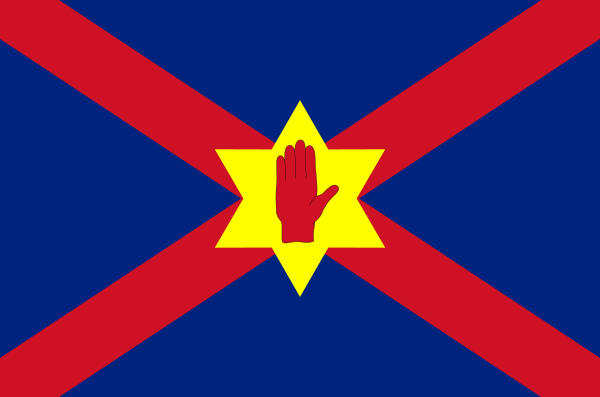
The design of a Ulster-Scots flag features a St Patrick's Cross combined with that of St Andrew, a theme that has appeared on other flags from Ulster. Being from that proud stock of people myself I am sympathetic for an ethnic flag. The design in question also features a red hand of Ulster and red lion of Scotland:
I think the positioning of the red hand and lion is a little odd, personally I would place them on the top and bottom quarters so that they have a more central position:
I personally think this is a better variant of the design but I still think it looks odd. The combination of Scottish and Ulster symbols is not an easy one, and the flag would look quite distinctive without the hand and lion so I would suggest dropping them and sticking with the saltires. Or if you want to reinforce the Ulster symbolism just drop the lion. I think most Ulster-Scots my self included have a deep attachment to the red hand (which is odd if one considers its history) that we don't have to the same degree for the lion rampant.
Well thats it, please feel free to comment and make sure you visit the website for yourself. Many thanks to Palomca for allowing me to post and share his material.
The Confederate Flag has been taken down from the State House of South Carolina. For many this is a long over due event, getting rid of racist symbols of hate. For others an attack on their heritage, culture and identity. Living in the UK I have been reading and listening to different people with different vies on it, so this is my view as an outsider. I normally try to steer clear of politics on this blog (especially foreign politics of which I will have little if any understanding) however as a student of vexillology and flag enthusiast, I don't think it unreasonable to look at this issue with an open mind and draw a conclusion. First of all, we need to establish one thing, and that is that the Confederate Flag, is not the Confederate Flag. As my favourite youtuber CGP Grey explains:
As I have always said history is very seldom black and white and the American Civil War and events after it are no exception. However there are some facts that can't be ignored.
At the time the USA was a country were it was legal for one human being to own another human being in some states.
The northern states were largely anti slavery and the south pro slavery.
The South seceded from the Union on the rights of states to govern their own internal affairs
The main topic in these affairs was slavery, but also things like trade restriction and territorial disputes.
Sizeable number of Confederate soldiers, possibly the majority did not own a slave
To begin with the Federal cause was salvation of the Union, President Lincoln had no policy to end slavery were it existed until 1863, Two years after the war began.
The Confederacy surrendered, US Territorial integrity was maintained and slavery was abolished.
These are facts that have shaped the arguments for both view points with both sides using the argument that suits them best. It can not be ignored that the Confederate flag was used by a "country" that advocated slavery, however if you use that argument, it should be noted that in its early history the United States also advocated slavery, so should the same stigma be attached to the Stars and Stripes?
Perhaps, but perhaps not as the US did eventually move to eradicate slavery, and address racial inequality (all be it relatively recent for the latter), There are two sides to every coin and we must ask ourselves tough questions like this before making decisions about the flag.
Perhaps my opinion is based on my experience of living in Northern Ireland, were a flag is a patriotic and sacred symbol to one group and the opposite of those things to the other group. Similarly the Confederate flag is a symbol of "Southern Pride" and heritage to some and hate, oppression and slavery to others. So as an Ulsterman I can understand to issue to a degree.
In fact in the east of the province Confederate flags have now appeared. While it was not odd to see the one or two at Ulster-Scots gatherings or band parades where they were used to represent that region of the US where many Scots-Irish emigrants settled, it is extremely uncommon to see them in such numbers in Northern Ireland particularly Belfast. What is common in NI though is flags being flown in solidarity, and this could be some unionists drawing a parallel to the Union Flag being restricted to designated days on Belfast City Hall, and the Confederate flag being taken down in South Carolina, despite fundamental differences in both events. Although it is refreshing to see that NI is not the only place that has trouble with flags.
Is it possible to fly Confederate flag and not be racist. Yes there are people who fly the flag and are reasonable people, expressing their heritage, culture and regional identity, and not all of them are racist in fact some are even African-Americans!:
Do racists use the Confederate flag? Yes, it is used by organisations like the Klu Klux Klan and there is no getting away from that, but so are other flags like the stars and stripes. So why is the Confederate flag apparently singled out? Well its popular use as a protest flag against race equality in the late 20th Century probably has something to do with it. But symbols and there meanings change with time. To use an example close to home, the red hand of Ulster is a Gaelic symbol with Gaelic origins, but despite that is a favourite symbol of Ulster loyalists!
President Obama said the flag belonged in a museum Should it be flown? Mr Obama is right it is a historical flag and as such does belong in a museum. If it is to be flown it should be flown for the right reasons. The Confederate flag was flown from the State House of South Carolina in the 1960s in protest of race equality. This is the wrong reason to fly the flag and as such I have come to the conclusion that it should have been taken down from the state house a long time ago.
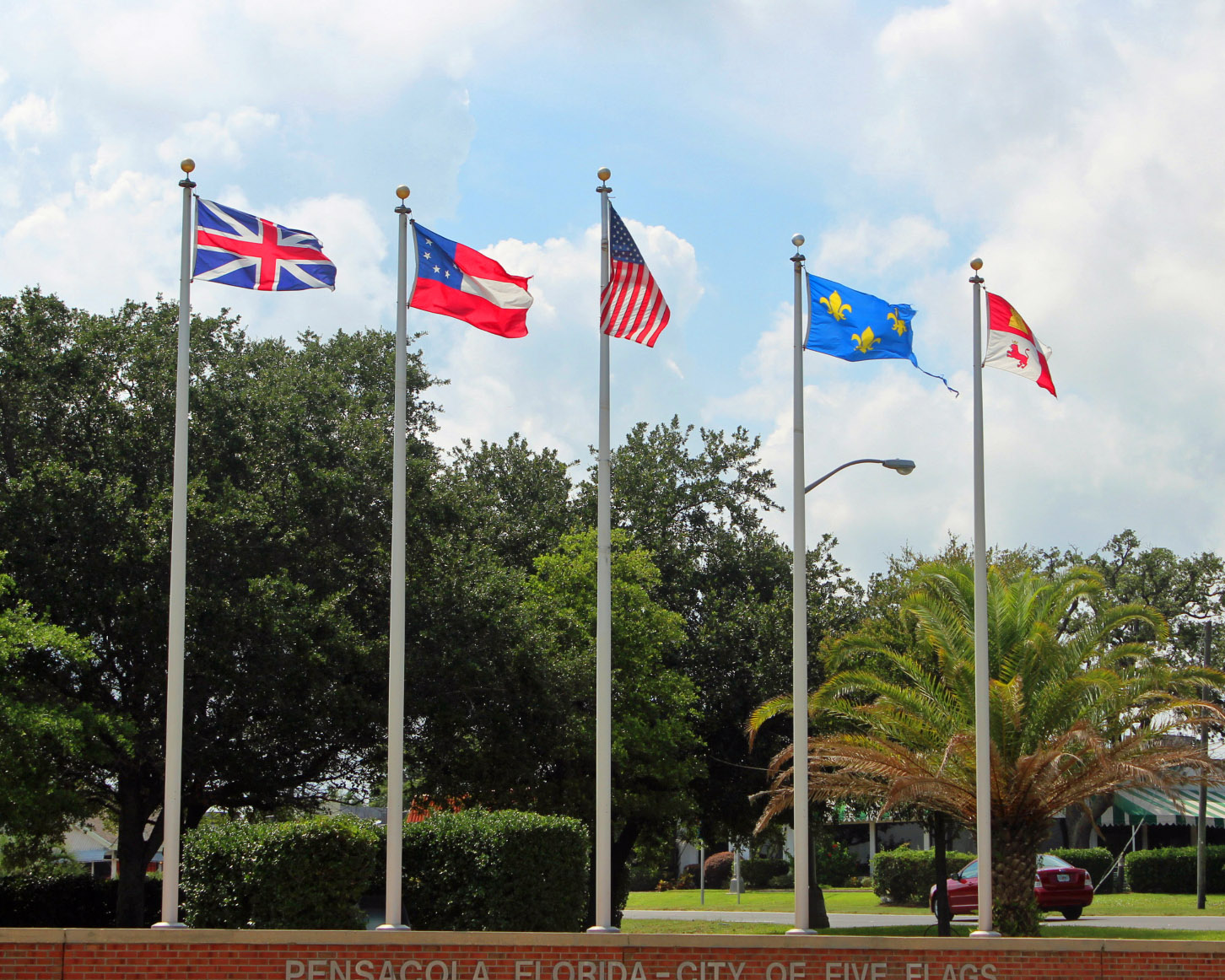
It is a historical flag but there are lots of historical American flags and I can't justify one getting precedent over the others. If it is to be flown from public and government buildings then perhaps it should only be used on significant anniversaries, or perhaps the adoption of a method like that used by the City of Pensacola, in Florida. There the five historic flags of the nations who's flag flew over the city (Spain, France, Great Britain, Confederacy and USA) are flown together. This is the correct use of the Confederate flag, outside of historical reenactments, as it is being used in its historical context. If it is to be used then I feel the Pensacola model is the one that should be used.
Also of note is that the Battle flag is not used here but the Stars and Bars, this is in fact more historically accurate, and is perhaps the better flag for use like this.
The Irish Association and the Institute of Irish Studies at Queen’s University, Belfast recently hosted a seminar on ‘The Historical and Social Impact of Flags and Symbols on our Society’ Speaking was Rev Brian Kennaway and Dr Dominic Bryan. Kennaway is a Presbyterian minister, past president of the Irish Association, and author of The Orange Order: A Tradition Betrayed. Bryan is director of the Institute of Irish Studies and Reader in Social Anthropology at Queen’s. Amongst his work he keeps records of flags flown from lampposts and street furniture in Northern Ireland. The lectures can be seen here:
Credit goes to the Slugger O'Tool youtube channel for the videos
The current flag of the Republic of Ireland rose to prominence in the Anglo-Irish conflict between 1919-1922, which resulted in the establishment of the Irish Free State and Northern Ireland. This flag was popular with those fighting the Royal Irish Constabulary and its Reserve and Auxiliary organizations due to its use in the 1916 Easter Rising, and after the conflict was adopted as the national flag of the new Free State. This has led many to think that it is a relatively recent flag, compared to the harp flags or St Patrick's Saltire, but its origins are older and it dates at least to the 19th Century. The colours of the flag are sometimes misunderstood. the flag has three vertical bars og green, white and orange, however the orange has in the past been mistaken for, and in some cases changed to gold, which to a certain extent still happens today.
The Orange & The Green
The two irreconcilable colours, that symbol the two tribes of people and two ideas of Ireland. When did orange mix with green is not fully known, but it probably was not in the uprising of 1798. In fact quite the opposite the rebels are known to have had a deep hatred of the colour. Orange was/is the colour of Protestantism and the Orange Order, a Protestant fraternity which commemorates King William III (Prince of Orange) and opposed the United Irishmen and its Republican ideas, and is loyal to the Crown. Green on the other hand was the colour of republicanism, revolution and an independant gaelic nation. A great way to see this is the songs of the time. The rebels sang songs like the croppy boy: which includes the lyrics
"I forsook the pink and the orange too,
But I did forsake them and did the deny
And I'll wear the green, like a croppy Boy"
While those who opposed the rebels sang songs like The Protestant Boys a variant of Lillibullero, which often spoke of the "old colours which flew o'er many a fray" and contained the lyrics:
"The Protestant Boys for liberty drew
and showed with orange their banner of blue...
...And Derry well
whose might can tell
and first in the ranks did orange display"
The Orange Standard of loyalism and the
green harp flag of nationalism
The thought of the two colours together is still thought of with a certain degree of scepticism, as one modern pub song the Orange and the Greens states:
"It is the biggest mix up that you have ever seen
My father he was orange, and my mother she was green"
While the latter song is light hearted and poking fun at the two groups, it underlines that the union of the two colours and symbolism was groundbreaking by 19th Century standards and probably ahead of its time. The first known use of the colours green, white and orange are not on a flag but a cockade (a decorative badge historically worn in military headgear, notably the bicorn hats and shakos), The cockade in question was mentioned in a letter from Amelia Eleanor Hamilton to the Marquess of Westmeath in 1830, which was to prepare an Irish address about the the new revolution in France. Miss Hamilton said the cockade had been worn in her father's hat and would like to see worn throughout the island, implying the colour scheme was unusual. The Cockade in question was orange, green and white, with the following meaning:
Orange, Green and White cockade
worn by Miss Hamilton's father
"Hereafter may the orange remind us only of a patriot king, a necessary revolution and a bill of rights; the green of that heart-cheering hue which a residing aristocracy can easily confer on our uncultivated bogs and mountains; and the white of a virtuous and peaceful people's fairly elected representatives in parliament."
Presumably Miss Hamilton's father was a Protestant nationalist (Irish politics was only beginning to become aligned to religious denomination at this time) and as such the intended symbolism of the colours in the cockade seem to reflect his identity or his idea of Irishness (Orange=Protestantism, green=land itself, white=peace and self government); rather than a union of two groups of people who share an island. However Miss Hamilton attached new meaning to it, the first lines of her letter began "May Orange and Green no longer be see, Destained with the blood of our island", this is clearly a reference to the colours symbolising two sides.
Early Flags
The three colours mentioned above gained popularity as political colours, and were used in all sorts of party ribbons, badges and bunting. When Daniel O'Conner, the man credited with Catholic emancipation entered Dublin in December 1830 at the start of his own career as a Member of Parliament, he was greeted by a display of ribbons and badges of such colours. He himself is said to have worn a medal, the ribbon of which was half green and half orange, which ties in with his statement "I come to Ireland to court the Orangemen. Oh, it opens a new ear... to behold the orange and the green." It is this event in which the earliest known mention orange, white and green flags occurs, they were waved by the crowd and were probably specially made for the occasion. he was also met by the banners (similar to Fraternity and Trade Union Banners)of the trade guilds of Dublin, The Carpet Weavers banner is of particular interest. It was a large tricoloured banner of green, white and orange. On the green bar was a harp and crown, on the orange two clasped hands, one in an orange glove the other in green; above which was a dove dropping an olive branch. On the white was the slogan "Repeal of the Union."
It is often said that the Irish tricolour was heavily influenced by that of France, This could well be the case, France had just restored its monarchy, however unlike before it was a constitutional monarchy, and the new king, Louis Philippe, restored the French tricolour as the national flag, which other kings had abolished due to its republican origins and symbolism, and it remains the flag of France to this day. This would have been big news in northern Europe and it is possible that the Irish mimicked it. The story of it being gifted by the people of France to the Irish however is unlikely.
This period was a time of land crises in Ireland and many tenant farmers and labourers began to challenge how land was divided up in Ireland and how it was managed. At one such meeting near Portadown in Co Armagh, a flag "striped with orange and green alternatively" flew briefly before it was torn down and torn up by a Mr J Brown who then persuaded the meeting to disperse peacefully.
The tricoloured flag started to appear in more and more political settings, however this politicised the flag, which as politics had by now mainly taken up its religious look, made the flag a victim of the circumstances which created it. However there was still hope this be reversed as a J.P Grey the son of an Ulster bishop remarked, he hoped that
"the Protestants of Ireland, should inflamed by generous nationality, march in the ranks of their Catholic countrymen, unfurl the standard of orange and green and....display their hereditary valour in fields that would eclipse the glories of Derry and the Boyne"
A National Banner?
It was in 1848 however that the tricolour gained popularity, in that year the King of France was again forced to abdicate by revolution and France once again became a republic. It became a common site to see the French tricolour of blue, white and red flying in Ireland as a symbol of solidarity.
In that year a party from the Young Irelanders movement traveled to France to gain support for their cause, however the only support they could count on was that of the Irish diaspora living in France, who presented to the group a tricolour of orange, white and green, on a pole topped by a pikehead. Members of the group included Meagher and John Mitchel, who spoke of the flag.
Meagher spoke of the symbolism of white representing a lasting peace between the orange and green, He then added
"If this flag be destined to fan the flames of war, let England behold once more upon the white centre, the red hand that struck her down from the hills of Ulster..."
The inclusion of the red hand of Ulster, was not on the flag and appears to be a proposal of his own invention. It would appear odd today to place provincial symbols on national emblems, however as Ireland was a constituent nation of the United Kingdom of Great Britain and Ireland, the lines separating national and provincial symbols were blurred, to the point they were all looked at as Irish symbols. But of all the comments about the flag the one of most interest came from Mitchel who said in his speech:
"My friends, I hope to see that flag one day waving as our national banner..."
This is quite an extraordinary statement, not only is he saying that it should be more than a flag for rallies or special occasions, but the national flag, and as early as 1848! This is all the more extraordinary when many believed unquestionably that the green harp flag was the undisputed emblem of Ireland since ancient times (although as we have seen it only dates to the 1640s). What happened to the flag?
In 1852 a senior British Police Officer was inspecting the Dublin Metropolitan Police stores in Dublin Castle. He noted two confiscated flags, one was "the flag given by certain Paris ladies of easy political virtue to Mr Meagher and captured in the summer of 1848," and the other was black with "the harp of Ireland in white" and "the words Famine and Pestilence" on the reverse. The tricoloured flag was indeed confiscated by Dublin Police during a riot and quoted at trials that followed, and is certainly the one mentioned, as to the sinister black flag its origins and details of how it came into the possession of the authorities are unknown.
There is also reports of tricolours including colours of orange, green and white, being used in the run up to the generously named 1848 rising (or rather skirmish with police).
Changes in Colour
In the mid 19th Century an organisation known as the Land League was gaining popularity, it's purpose was to stand for the rights of Tenants. It put forward candidates for election in 1850, notably the Rev David Bell. /During this campaign a new flag came out, it was also a tricolour, Its colours were green for Roman Catholics, Orange for Anglicans and Blue for Presbyterians. This flag is interesting as it doesn't "tar the Protestants with the same brush" but rather separates them into their two largest denominations.
This appears to have been a one off flag and it soon disappeared.
The significance of the orange in the flag was also soon lost, The rise of Fenianism wanted little to do with the Orange Tration and Ulster was staunchly opposed to Home Rule. As a result of such use of the flag declined drastically, although there are examples of green, white and orange colours still being used in Nationalism, however these were primarily in sashes, cockades and political badges rather than flags.
In Fact the only way the flag seems to have survived is by replacing the orange with yellow or gold. This has resulted into much confusion to this day, with the flag popularly referred to as green, white and gold! This would of course destroy the symbolism of the flag, and it has been suggested that the colour sense of some Victorians was defective, and that the shades yellow and orange were interchangeable.
There are also depictions of flags being used by the followers of Parnell that is yellow, white and green. This is in the form of a horizontal tricolour, rather than a vertical one.
Although it might have practically disappeared into obscurity the tricolour survived because it was revolutionary and new, where as other flags such as the green harp flag were old, popular with the moderate mainstream of nationalism and was even beginning to be accepted to a certain extent to the establishment. This is perhaps why a tricolour was chosen to drape the coffin James Stephens a leading figure of the Fenian movement in 1901, despite the fact the Fenians had no real connection with the tricolour, at least not when Stephens was alive. The Fenian flags as we have seen were the green flags and sunbursts. As theses flags became more familiar they probably lost their radical meaning which is why a tricolour (still a rather unknown flag in Ireland) was used. There aren't any real references to the use of tricolour flags by the Irish Volunteer Force, although in 1916 the Volunteers who hadn't volunteered for military service in WW1, were known to wear tricoloured arm bands. As the organization split on the issue of military service it could be said that these men wore the bands to identify themselves from their former comrades now in the Army.
1916 Easter Rising
The tricolour was favoured by the rebels of 1916 probably because to them it was different. They wanted as they saw it, a new age and a new symbol, and for them the tricolour was that flag. Weather they new or understood the original symbolism is debateable, It is probably fair to assume that they didn't, however the symbolism of its colours was irrelevant because of the reasons already mentioned. The tricolour was not the only flag to be flown in rebellion in the rising of 1916, however there were at least four tricolour flags, at least one of which was horizontal rather than vertical. The Tricolour was flown from the General Post Office (GPO) which was the headquarters of the rebellion. One of the rebels Sean T O'Kelly (who would later become Irish President) recalled that the rebel leader Connolly had:
The Tricolour flown from the GPO in the rising
"instructed me to go to a certain room in Liberty Hall. In a press which he described I would find a large brown paper parcel two flags, one tricolour and the other a green flag with a gold harp in the middle..."
The problem with this is that the green flag is not mentioned in any of the eye witness accounts or photographs, It is possible that the flags could have been replaced, the President's quote was made years after the event, and it is possible his memory was playing him false.
The tricolour was not the only flag hoisted in rebellion in 1916, there was at least one green harp flag. A green harp flag flown from an empty building, and served to draw the fire of a government gunboat.
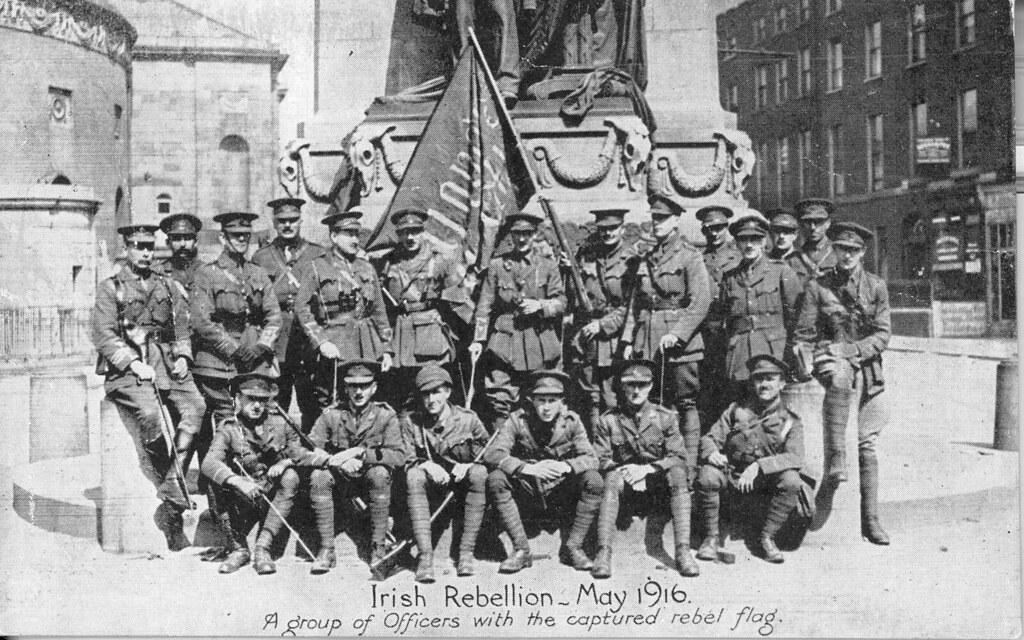
Government troops with the captured "Irish Republic" flag
In this pic the flag is purposely being held upside down.
The most famous non tricolour flag associated with the rising was the Irish Republic flag, this was a green flag with the words "Irish Republic" on it in white and edged in orange or yellow. This flag flew from the GPO, alongside the tricolour. This flag was kept in the Imperial War Museum in London, It was gifted to the Irish Government in 1966, to mark the fiftieth anniversary of the rising. It is now in the safekeeping of the National Museum of Ireland.
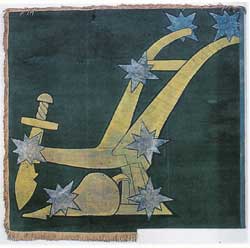
Original Starry Plough flag of the 1916 rising
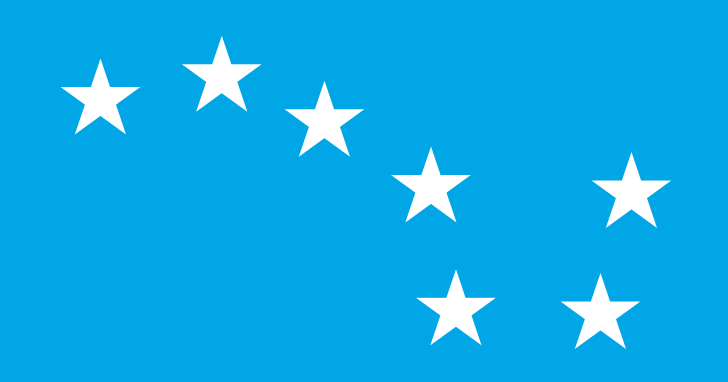
The other flag used during the rising was the starry plough of the socialist Irish Citizen Army. This was a green flag with a yellow plough, on which were the stars of the Big Dipper constellation.blue, red and green Variants are still common with Republicans particularly by the Irish Republican Socialist Party. It is often compared to the flag of the American State of Alaska, however it is more than a decade older.
Independence, Civil War & a National Flag
The use of the tricolour in the Easter Rising marked it out as the flag if rebellion. The gorilla nature of the conflict in Ireland following WW1 ment that flags were little used. However it was the common practice of those in sympathy with the guerrillas to tie a tricolour to a weighted rope and suspend it from a telegraph wire, which made it particularly difficult for the police to remove! Following the Anglo Irish Treaty the tricolour was adopted as the flag of the new Irish Free State. Its popularity was a result of its association with the rebels and not because of its original symbolism. After the establishment of the Free State, civil war broke out between Republicans and the new government. Both sides used the tricolour. It is sometimes said that the new State Army used the tricolour of Green, White and Orange and that the Republicans used the tricolour of green, white and gold, however their is no evidence to support this and both variants were probably used by both sides.
Blessing the Colours by John Lavery
The flag was adopted as the national flag and state ensign, however it was the national flag through precedent rather than law. It was not until the adoption of the Irish Constitution and creation of the Republic of Ireland in 1937, that it was enshrined in law.
In article 7 of the constitution the tricolour of green, white and orange was officially the national flag. However the constitution does not specify the offical symbolism of the colours. The closet you get to official symbolism is a protocol booklet, by the Department of the Taoiseach (Prime Minister). It specifies that the flag symbolises "the inclusion and
hoped-for union of the people of different traditions on this
island," and actively discourages the use of yellow and states faded flags should be taken down and replaced.
At sea the tricolour was originally reserved for state ships, it was not until 1939 its use was extended to merchantmen.
For more in this series see the links below or click the label History of Irish flags:
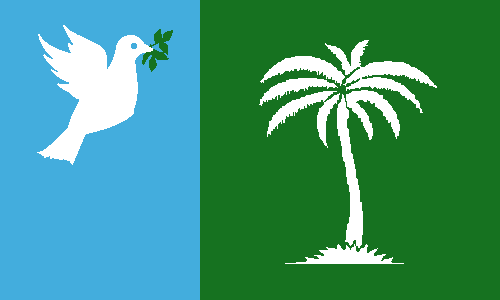
This got me thinking what could replace it? This was a topic visited by Leonardo Piccioni a while ago on his blog. His design was this:
and this
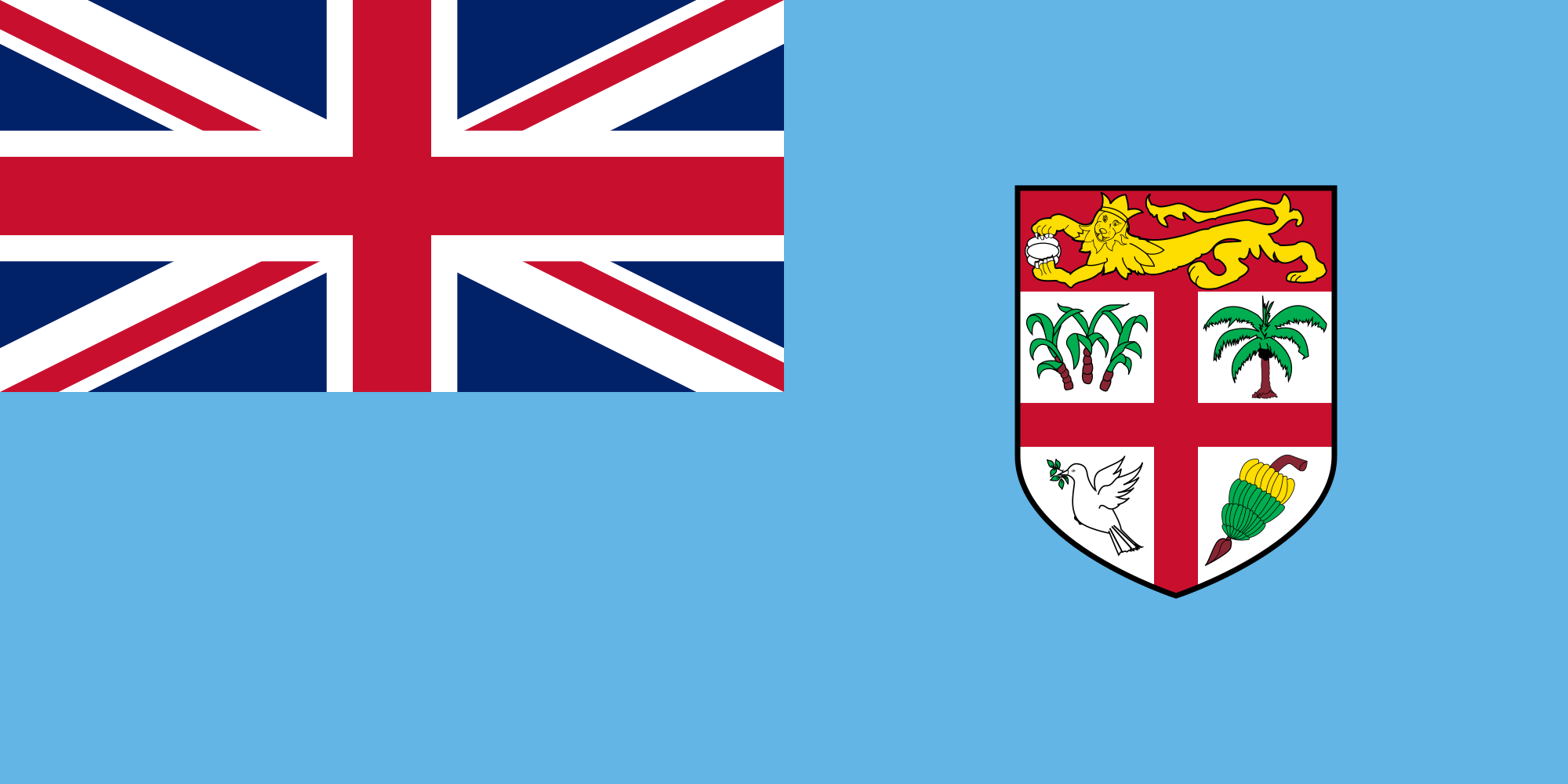
His flag was based on the flag of the Kingdom of Fiji before it became a colony, with the palm tree coming from the coat of arms and rugby logo:
flag of Fiji 1871-1874
I was also inspired by the old flag, however I chose two different symbols for Fiji, the canoe from the coat of arms (which may also be changed) and the Tabua (Whale tooth) an important cultural item.
The same basic flag as the Kingdom but with different symbols. My final design is horizontal and features the red white and blue colours of the first Fijian flag, with the Tabua as the central device.
I think the Tabua only on a horizontal design is much less messy, and this way most of the flag is on a blue field, which is in keeping with the lyrics of the national anthem "As we stand united under noble banner blue."
Alternatively the canoe could be used, but from what I understand (which admittedly isn't much) the Tabua seems to be more relevant in modern Fijian culture.
This post looks in brief at the national flags of Ireland used in the 19th and early 20th Centuries. Following the rising of 1798, the parliaments of Ireland and Great Britain were united. The Kingdom of Ireland, ceased to exist and the island was now part of the United Kingdom of Great Britain and Ireland. Officially the national flag of Ireland was like the rest of the UK the Union Flag (or Union Jack) now with a St Patrick's Saltire representing the Irish part of the Union. However for many the spirit of the rebellion was still fresh in their mind, and the green flag with a gold harp, the flag used by the rebels, was used as a defacto Irish flag. This "Irish Jack" continued to be used by some Irish people as their flag at home and abroad, and only ceased to be the prime flag after the Easter Rising of 1916. The first picture of this post is of the LÉ Róisin docked in Londonderry last year. I took this picture when the ship along with HMS Severn visited the city as part of its annual maritimefestival. This picture is particularly interesting as the Róisin is flying the two flags this post is about. The green harp flag, which is the Naval Jack of the Irish Defence Forces, and the Union Jack, which is in the role of a courtesy flag as Derry is a Northern Ireland city (although according to Queen's Regulations, the white ensign is the correct courtesy flag for a warship visiting the UK). A rather rare occasion when both flags were seen alongside each other.
The Union Jack
Original Union Flag of James I
combining the English & Scottish banners
The Union Flag was the official flag of all of Ireland from 1801 to 1922, however its use on the island pre-date the Act of Union of 1801. The pre-1800 Union Flag replaced the St George Cross as the flag flown over military forts and garrisons in 1707, when England and Scotland united. Although there are suggestions it might have been used in that capacity earlier. One of the depictions of Irish forts by the military engineer Thomas Phillip in 1685, shows the fort flying the Union Jack, despite the ensigns of ships in the bay showing a St George Cross in the canton. The information board about the flag at Enniskillen castle also states the the St George's Cross was the national banner until 1606. However it also says that St George's Cross was the flag used in 1688, when the Inniskilling regiments were raised. The original Union Flag combines the Cross of St George with that of St Andrew and was introduced in 1606 by King James I/VI to be used on Scottish and English (and by extension Irish) ships, following the union of the crowns. However it was a maritime flag and rarely used on land. It is probably the maritime use of the flag that the information board is mistaken about.
Protectorate Jack 1658-1660, with Irish harp in centre
The absence of Irish representation was noted after the victory of Oliver Cromwell's Roundheads in the War of the Three Kingdoms. As noted in Part 5 the arms of the "Commonwealth" established by Cromwell's parliament, was two shields beside each other, one bearing St George's Cross, the other the Irish harp. This was reproduced in the flag used by "the Admiral, Vice-Admiral, and Rere-Admiral" The Jack of the Commonwealth was also the cross of St George impaled with the gold harp on a blue field. This "cross and harp jack" was used untill 1658, when it was replaced by the "Protectorate Jack." This flag was a Union Jack defaced with the arms of Ireland, it was used from 1658 until the restoration of the monarchy in 1660. The fact that the harp is placed in such a prominent position, and its preferred use over St Patrick's Cross is interesting. It is sometimes said by critics that this flag is proof that St Patrick's Cross was a later invention, however if one looks at flags of the period, the harp appears in many of the flags of the "Commonwealth" and so it seems natural that is continued in the Protectorate Jack. Likewise the Irish Confederates fought under a red saltire, that often appeared in the Canton of their flags, so any symbol that resembles that would have been tainted in the eyes of the Roundheads. It should also be noted that the original Union Jack continued to be used by Royalist exiles, and a defaced flag would probably be easier to distinguish from this, than one with a red saltire. After the interregnum period of the British Isles ended in 1660, the Kingdom of Ireland continued as before, and this flag being seen as republican ceased to be used. As already mentioned in part 8 the Union Jack was used by Irish regiments both regulars and militia, throughout the 18th Century.
The Union Flag of 1801, with the addition
of St Patrick's Saltire, the current UK flag
Following the Irish Act of Union the flag got its last modification to give it, its' current form, as mentioned in Part 7 the St Patrick's Saltire was added to the union of crosses. It was officially hoisted up the pole, on top of the Bedford Tower of Dublin Castle at noon on 1st January 1801, while cannons in Phoenix Park fired a 21 gun salute. It should be noted that while Irishmen and women took the green flag with them all over the world, they also helped take the Union Jack to all corners of the world. A good example is when British sovereignty was re-established on the Falkland Islands in 1833, it was an Irishman, William Dickson who was appointed as the permanent British representative. Dickson who was of Irish origin came to the islands from Argentina, and was provided with a flag and flag pole, and given the duty of flying the British flag from the flag pole, whenever a ship was in harbour.
George IV entering Dublin
Back in Ireland the Union Jack was used officially and unofficially both by the government, police, military and loyal citizens and private businesses. When the King (George IV) visited Ireland 1821 towns and cities all over the island displayed Union Flags, blue bunting, and interpretations of Royal Banners. The 19th Century was a time degenerate heraldry, and a rather unique flag is depicted welcoming the King in a painting by William Turner. In it's canton is a Union Flag, below which a figure of Hibernia, with the Royal arms in the fly.Unlike his later visit to Scotland where he wore a kilt, the King did not ware traditional Irish dress but military uniform, although he did ware the bonnet with a sprig of shamrock, robes and regalia of the Order of St Patrick.
Standard of Lord Lieutenant of Ireland 1801-1921
Flag of the Governor of Northern Ireland 1922-73
The flag of the King's representative, the Lord Lieutenant of Ireland, was a Union Jack defaced with gold harp on a blue shield. A rather interesting similarity to the Protectorate Jack. However this flag was in line with representatives of the sovereign like governors. When the Irish Free State was established as a British Dominion in 1921, it was unique among the other Dominions, as the King's representative didn't fly the Union Flag but a tricolour. The Free State was at this time a republic in all but name. The monarch's representative in Northern Ireland however, did continue the practice of using a defaced Union Flag, however this was defaced with the NI coat of arms, rather than a harp. The shield was on a yellow background, often mistaken for orange. But this was just so it would stand out rather than symbolise Protestantism. Unlike the variant on Wikipedia and Chinese made reproductions where the background is mistakenly white, which is common for other Governor's flags.Like the Ulster Banner this flag ceased to be official when the NI Parliament was dissolved in 1973. The ordinary Union Jack continued to be used as the national flag in Ulster, as Northern Ireland remained a constitutional part of the United Kingdom after 1921, and remains so to this day. The Union Jack like most flags in NI is often seen and used as a party emblem, or Unionist symbol as well as the national flag. It is often among the "unauthorised" flags used to "mark territory" by being flown from street furniture. The Union Jack in the Northern Ireland context has been in the media glare recently, due to the Protests of 2013 and 2014. This was as a result of Belfast City Council restricting the number of days it flies the flag, on public buildings including city hall. Many people responded to this with mass protests, not just in Belfast but all over the province. It was seen as the "last straw" in what many saw was the slowly but steady, one small step at a time attempt to eradicate their culture, identity and any symbol of NI being part of the UK, It should be said however that while the demonstrations that turned violent were broadcast all over the world, the majority although perhaps disruptive were peaceful.
Union Flag Protest in Derry 2013
However it should be noted that a designated days pattern is common throughout the United Kingdom. It is common in the devolved governments of Scotland and Wales, and by English councils, it has even been the practice of the NI Assembly since its establishment, and the policy of the British government's Northern Ireland Office and NI court houses. However the timing of the decision 2012, the centenary of the Ulster Covenant and the fact that since it was signed, the flag flew every day, the symbolism of this stopping on the Covenants centenary could only be interpreted as a hostile act.
Community relations haven't been the same since 2012. The fact that some councils in NI fly the flag daily, others on designated days and some don't use it at all, is a sad reflection on the lack of constructive, progressive and open flag strategy in N.Ireland.
The most recent controversy is that the flag will not appear on NI driving license but will appear on those of England, Scotland and Wales.
The Union Jack is the only official national flag of Northern Ireland
For more on the national flag of the United Kingdom click here.
The "Irish Jack"
Jack of the Irish Defence Forces' Naval Service
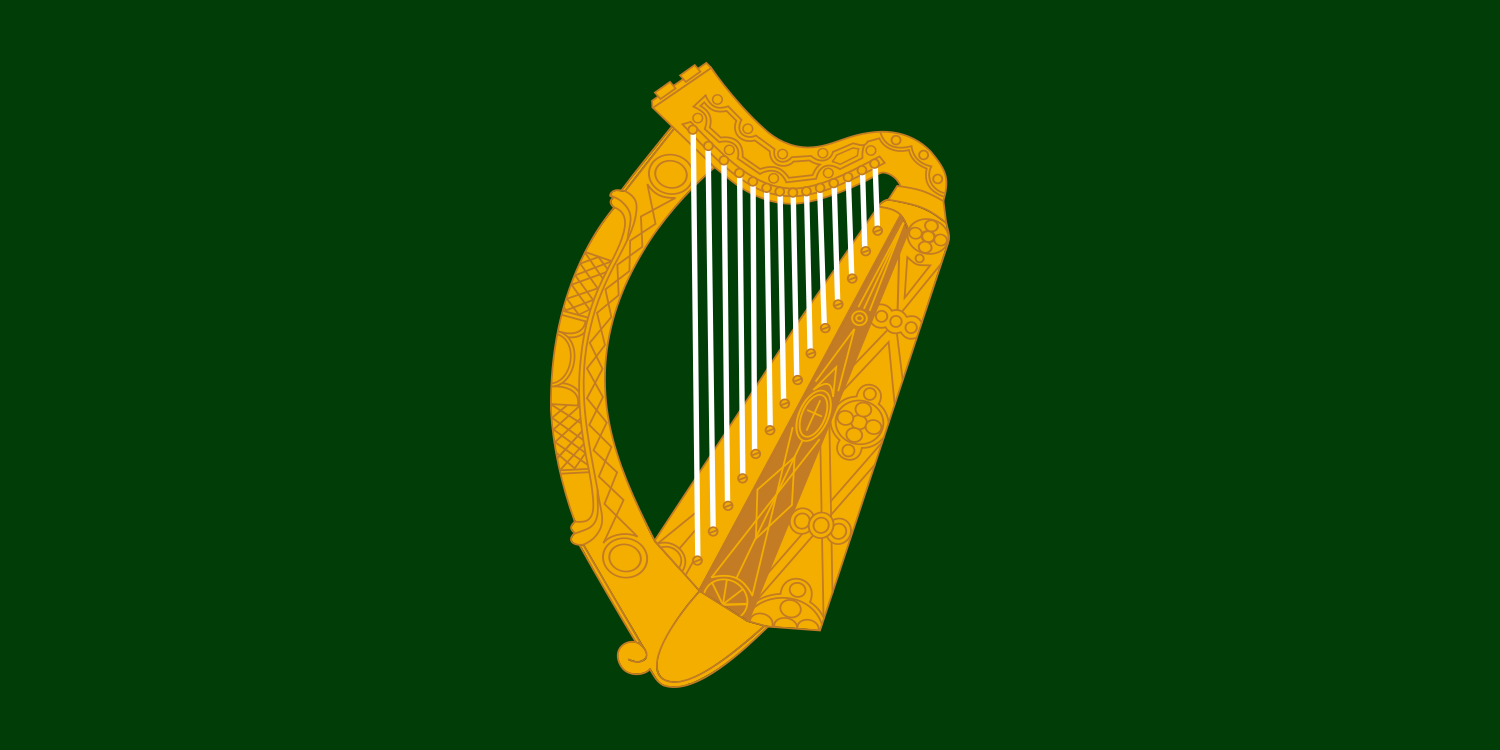
It is perhaps appropriate that the earliest known use of the flag, now used as the navy jack of the Irish Republic, was also on a ship of war. While the harp can be traced at least to the fifteenth century its first known use on a green flag is not until 1642. Owen Roe O'Neil is reported to have flown it at the masthead of his frigate the St Francis. O'Neil was a soldier in the Spanish army and grandson of the exiled and rebellious clan chief Hugh O'Neil. Upon hearing of the rising of 1641, he loaded his ship with arms and other instruments of war and set sail for Ireland to join the Kilkenny Confederacy. After landing his cargo in County Donegal the St Francis seat sail to Dunkirk in France with tradable goods, presumably to trade for more weapons. While she lay off Dunkirk she reportedly flew in her maintop "the Irish harp in a green field, in a flag." Although the colour of the harp is not given, it was presumably gold/yellow. The exact form of the harp is unknown, it could have been plain pillared, maid pillared, or even beast head pillared. It should be noted that this flag was not widely used by the Confederates, despite it being popularly portrayed as the Confederacy's flag. The cross potent and red saltire were far more popular in 1642.
After 1642 this flag seems to have practically disappeared. Although many of the Volunteer flags some of them green, featured harps as their central badges, it is possibly these flags that inspired those of the United Irishmen rather than a continuation of 1641.
Following the Act of Union the green flags of all sorts were used by the followers of O'Connell seeking repeal of the Union, none more so than the green harp flag, but flags with political slogans were also popular. One flag at one of the "monster meetings" of 1843 featured the national device below which was the word "Independence." The harp was sometimes accompanied by an "antique" crown. Its important to note that many nationalist only wanted Ireland to regain its status as an independent kingdom, with its own parliament rather than an separate republic. This is reflected by the crown, many more radical flags dropped the crown and this became standard as time went on.
An Irish flag captured in South Africa in 1900
As France was again plunged into revolution in 1848, this once again reignited the revolutionary fever in Ireland. A green Irish flag was presented to the new French government in Paris by a delegation of Irishmen living there. This event was noted by the British diplomatic service, and the British Ambassador to France asked for a "friendly explanation" of the incident saying That he "knew no such thing as an Irish flag, and if it was offered to place it by the side of the French colours, it could only be a rebel flag." The French Minister of Foreign affairs reassured the ambassador that France didn't recognize "any national flag in Ireland but that of the United Kingdom." Tensions were high between Britain and France, and no doubt the French were unwilling to provoke the UK. Another flag that appeared in England at the same time was a green flag. This was borne by the Irish of London at a demonstration in 1848. It was a green flag with a red boarder. Above a harp was the inscription "Irish Confederation" and below it "Let every man have his own country." The club was part of the "Young Ireland" movement. This was one of many political harp flags borne at political meetings throughout the 1840s. When the Dublin Young Ireland movement attempted an uprising, they were led to their rendezvous by a flag and fife and drums. This uprising was little more than a skirmish with the police, and failed to capture the imagination of the Irish people as such very few flags apart from the ones mentioned are known to be associated with it. It should also be noted that the Irish Police the soon to be Royal Irish Constabulary wore green, this was recognised by the Young Ireland leader, Meager who when addressing a rally a few days before this uprising said he was glad to see many of his brother Irishmen listening to him wearing green, he was of course talking about the officers of the Irish Constabulary. Although the green uniforms were based on those of the British Army's Rifle regiments this note suggests that many Irishmen saw the police uniform colour as significant. Unfortunately the police of the Republic of Ireland An Garda Síochána (literally translating to Guardians of the Peace) decided to adopt a blue uniform rather than continue the green uniforms of their predecessors. This tradition was carried on by the Royal Ulster Constabulary, and green continues to be worn by the Police Service of Northern Ireland.
Irish American greeting card
It was also used by the militant Fenian Brotherhood although it was only one of a variety of flags they used.
Irish flag, according to the
Library Atlas of Modern Geography 1892
The green harp flag was taken by emigrating Irish to all corners of the world, especially British colonies and the United States, where it appeared on many Irish-American greetings cards. It became accepted as ancient flag of Ireland without question, although as is evident in this series that is not the case. None the less the green flag was immortalised in ballad and poem, with lyrics like "When her kings with standards of green unfurled, led the red branch knights through danger" (Let Erin Remember, T Moore 1779-1852), and as such it was accepted as the Unofficial flag of Ireland. It even appeared in flag charts, atlases and encyclopedias. It is through this acceptance that it gradually lost its radical appeal. It became the de facto flag of Ireland and not the flag of radical nationalism.
However it was still not without its controversies.
In 1885 during the early days of the Home Rule debates, an effort was made to reignite the radicalism of the green harp flag. There was an appending visit to ireland by the Prince of Wales. The the Lord Mayor of Dublin who was a nationalist, said that the moment the Prince arrived on the island, he would take down the flag of Dublin, which had by custom flown over the Mayors residence when he was in residence. This insult offended the students of Trinity College who one night raided the Lord Mayor's garden and stole the flag! The Dublin flag was a heraldic banner of the city's coat of arms, three burning castles on a blue field.
Flag of the City of Dublin
The nationalists responded by ordering a new flag. This was a green harp flag, but in the canton it had the Dublin City banner! Not only did this offend the unionists and establishment but also the nationalists! Many were offended by the arms of a city in the canton of "the national banner" The nationalist advocate P.J.Tynan said "Dublin Municipal Council changed the city flag to the national colours, degrading the immortal green of the nation to the mere emblem of a municipality." Despite all these criticisms the flag survived and is still the city flag of Dublin.
In 1906 during the Athens Olympics, Irishman Peter O'Conner, won silver in the long jump. He successfully objected to the raising of the Union Flag in his honour, and a green harp flag provided by some of his supporters was raised instead.
The 16th (Irish) Division of the 1st World War petitioned to have an official divisional flag. This was a green harp flag with 16th(Irish) Division. This was declined on the grounds that flags were borne by battalions (regimental colours) and not divisions, however green harp flags were used by Irish troops in the Great War. There is a photograph of John Redmond presenting Irish Volunteers with one before they depart for the front. There is also a report of the Connaught Rangers marching behind one in Gallipoli. The story says that they had a green harp flag flying and the pipes and drums playing Killaloe, much to the delight of nearby French troops. A detachment of Foot Guards even presented arms mistaking the flag for a regimental colour!
The acceptance of the green harp flag as the national emblem is demonstrated here, infact had the Easter Rising not happened it could well have been the modern flag of Ireland. The green harp flag was even used in recruitment posters for the army:
The last one is interesting as it places the Irish flag alongside other national flags including Britains which suggests Ireland is a separate entity to Great Britain, which seems odd for a British Army poster.
The green harp flag has even been the basis of the flags of Irish regiments. The flag of the Ulster Defence Regiment for example is a green harp flag with a central red stripe.
Flag of the Ulster Defence Regiment 1970-92
Today though apart from its use as a Naval Jack, the green harp flag is primarily associated as the provincial flag of Leinster. a harp on green field can be traced as the Leinster arms as far back as 1651. You might note from Part 2 that arms used as national devices in the past are now provincial emblems, the best example being the three crowns of Munster. Could this be the case with the arms of Leinster, could they just be a corrupted version of the arms of Ireland? Could the confusion of the Leinster flag and "national" green harp flag be traced to the Confederation of Kilkenny (Kilkenny is in Leinster)? Could it be that the flag flown from O'Neil's ship was a token to Leinster, the capital province of the confederacy, rather than Ireland? If so then the fact that the green harp flag became accepted as the national device would be one of the great ironies of history. It should be noted that although both versions of the Irish harp are heraldically speaking the same, the Leinster flag has by custom adopted the plain pillared harp only.
The flag of Leinster
The green harp flag has even had limited acceptance among Ulster Unionists. one good example is the arms attributed to the 36th (Ulster) Division of the 1st World War, features two emblems in its chief. One is a Union Jack symbolising Britain but the other is a harp on a green field symbolising Ireland.
It should be noted that these are attributed arms, there is no evidence of the 36th Division using them as divisional insignia (although they did appear to use a red hand on white shield), and were probably adopted after the war, for use by those who identified with the division and possibly veterans. It seems appropriate that I end the post here as I started it with the two emblems side by side.
For more in this series see the links below or click the label History of Irish flags:





 The current flag of the Republic of Ireland rose to prominence in the Anglo-Irish conflict between 1919-1922, which resulted in the establishment of the Irish Free State and Northern Ireland. This flag was popular with those fighting the Royal Irish Constabulary and its Reserve and Auxiliary organizations due to its use in the 1916 Easter Rising, and after the conflict was adopted as the national flag of the new Free State. This has led many to think that it is a relatively recent flag, compared to the harp flags or St Patrick's Saltire, but its origins are older and it dates at least to the 19th Century. The colours of the flag are sometimes misunderstood. the flag has three vertical bars og green, white and orange, however the orange has in the past been mistaken for, and in some cases changed to gold, which to a certain extent still happens today.

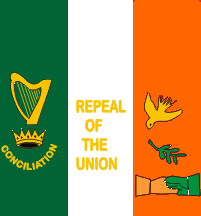 he was also met by the banners (similar to Fraternity and Trade Union Banners)of the trade guilds of Dublin, The Carpet Weavers banner is of particular interest. It was a large tricoloured banner of green, white and orange. On the green bar was a harp and crown, on the orange two clasped hands, one in an orange glove the other in green; above which was a dove dropping an olive branch. On the white was the slogan "Repeal of the Union."
 "If this flag be destined to fan the flames of war, let England behold once more upon the white centre, the red hand that struck her down from the hills of Ulster..."
 In the mid 19th Century an organisation known as the Land League was gaining popularity, it's purpose was to stand for the rights of Tenants. It put forward candidates for election in 1850, notably the Rev David Bell. /During this campaign a new flag came out, it was also a tricolour, Its colours were green for Roman Catholics, Orange for Anglicans and Blue for Presbyterians. This flag is interesting as it doesn't "tar the Protestants with the same brush" but rather separates them into their two largest denominations.
  This would of course destroy the symbolism of the flag, and it has been suggested that the colour sense of some Victorians was defective, and that the shades yellow and orange were interchangeable.



.svg/2000px-Flag_of_the_Commonwealth_(1658-1660).svg.png)


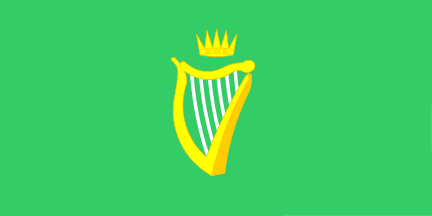
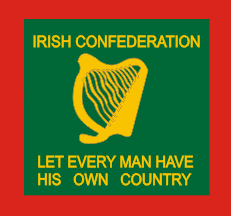 Another flag that appeared in England at the same time was a green flag. This was borne by the Irish of London at a demonstration in 1848. It was a green flag with a red boarder. Above a harp was the inscription "Irish Confederation" and below it "Let every man have his own country." The club was part of the "Young Ireland" movement. This was one of many political harp flags borne at political meetings throughout the 1840s. When the Dublin Young Ireland movement attempted an uprising, they were led to their rendezvous by a flag and fife and drums. This uprising was little more than a skirmish with the police, and failed to capture the imagination of the Irish people as such very few flags apart from the ones mentioned are known to be associated with it. It should also be noted that the Irish Police the soon to be Royal Irish Constabulary wore green, this was recognised by the Young Ireland leader, Meager who when addressing a rally a few days before this uprising said he was glad to see many of his brother Irishmen listening to him wearing green, he was of course talking about the officers of the Irish Constabulary. Although the green uniforms were based on those of the British Army's Rifle regiments this note suggests that many Irishmen saw the police uniform colour as significant. Unfortunately the police of the Republic of Ireland An Garda Síochána (literally translating to Guardians of the Peace) decided to adopt a blue uniform rather than continue the green uniforms of their predecessors. This tradition was carried on by the Royal Ulster Constabulary, and green continues to be worn by the Police Service of Northern Ireland.


 The 16th (Irish) Division of the 1st World War petitioned to have an official divisional flag. This was a green harp flag with 16th(Irish) Division. This was declined on the grounds that flags were borne by battalions (regimental colours) and not divisions, however green harp flags were used by Irish troops in the Great War. There is a photograph of John Redmond presenting Irish Volunteers with one before they depart for the front. There is also a report of the Connaught Rangers marching behind one in Gallipoli. The story says that they had a green harp flag flying and the pipes and drums playing Killaloe, much to the delight of nearby French troops. A detachment of Foot Guards even presented arms mistaking the flag for a regimental colour!






.svg/2000px-Flag_of_the_Commonwealth_(1649-1651).svg.png)