I would like to express my support for 14 year old Liam Kenward from Loose in Kent. This young lad has an impressive collection of over 200 national flags and ensigns, which he regularly flew from two flag poles in his garden. However following a single complaint his local council has ordered him to remove the flags and that he can only have one pole of reduced size, from which he can only fly one flag at a time. The full story was reported in the Mirror. I know the way the flags are flown may not strictly be in accordance with protocol, (I personally wouldn't fly more than two flags on a single pole and only in certain circumstances) but in my view protocol is just guidelines and private citizens can display their flags how they like. I fail to see the logic behind this story, perhaps if there were numerous complaints from neighbours, who have to live there everyday I could understand. But a single compliant from an anonymous source, I think the council acted a little rashly. From what I understand all these flags were national flags and nautical flags of various countries around the world, and not anything that could cause offense.
Just when I thought we lived in a free country.
Anyway rant over
Friday, 27 February 2015

Friday, 20 February 2015
New South Wales
The flag of the Australian state of New South Wales is like most Australian state flags a blue ensign with a British Union Fag in the Canton, and a regional insignia in the fly.
 Despite the name "New South Wales" there isn't any Welsh symbolism on it at all! The emblem in the fly is a cross of St George of England bearing a lion and Southern Cross.
I corrected this by changing the emblem just a little bit:
 I replaced the St George's Cross with that of St David the patron saint of Wales, and the lion with the famous red dragon. The idea is really the same as the original flag but with Welsh symbols rather than English.
However if New South Wales wants to move away from British ensigns to something more original, i though of this flag:
 Its an inverted Cross of St David defaced with the Southern Cross (in the same pattern as the Australian flag). The reason I inverted the colours of the Cross of St David are:


I corrected this by changing the emblem just a little bit:
However if New South Wales wants to move away from British ensigns to something more original, i though of this flag:
- So it would be distinctive from the unofficial second flag of Wales
- I wanted to show a connection to Wales, but at the same time I wanted it to be Australian rather than Welsh. The same way the Nova Scotia flag symbolises a connection to Scotland but stands out as something Canadian rather than Scottish.
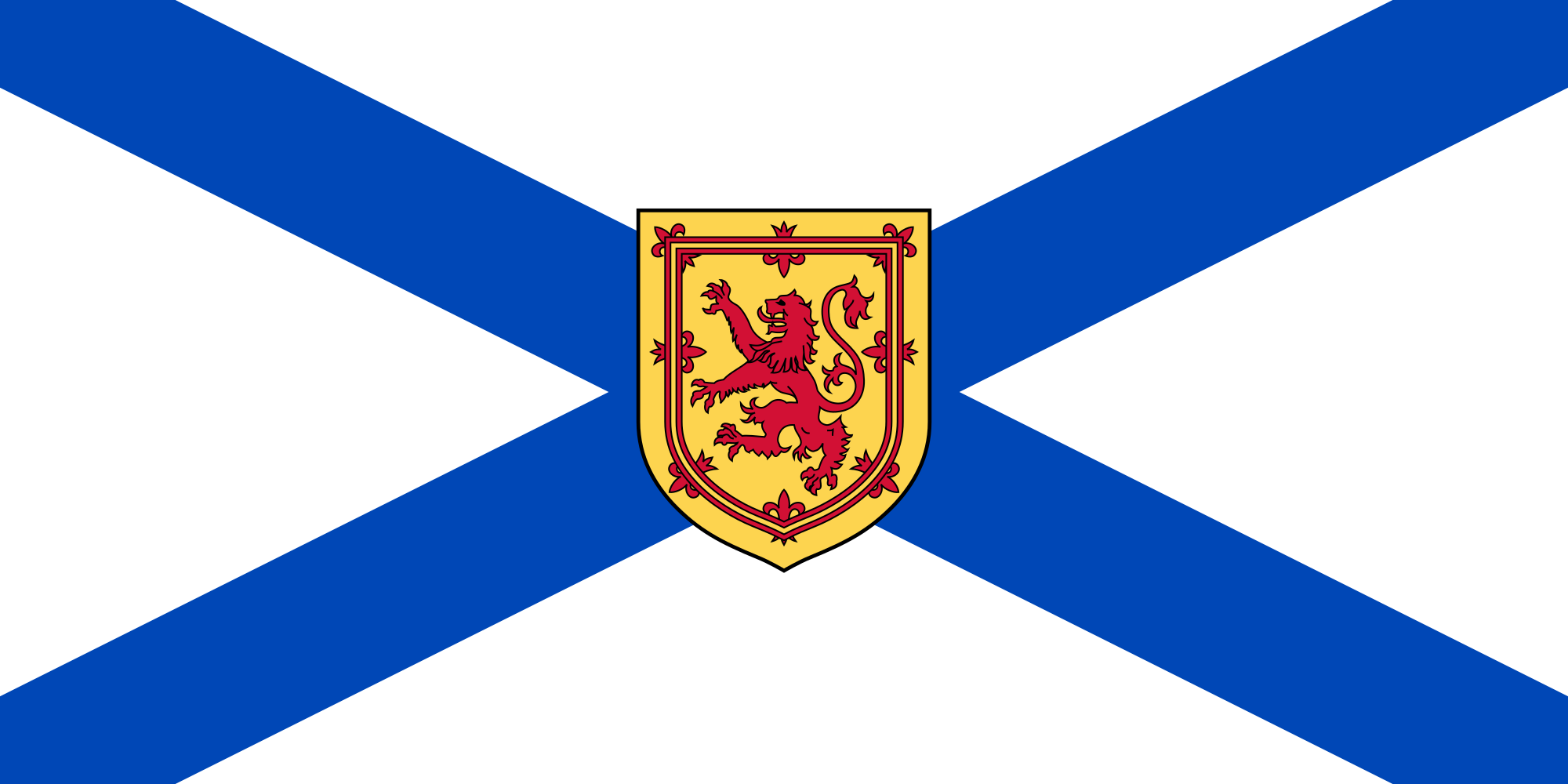
However I think this might empathise the Welsh connection too much, which might defeat the point of inverting the colours in the first place. On the other hand though dragons are cool.
Sunday, 8 February 2015
Development & History of Irish flags Pt11: the Fenian Brotherhood
The Fenian and Irish Republican Brotherhoods was a militant republican organisation founded in 1858 with a large following and support among the recently arrived immigrants in the United States of America. The name Fenian was adopted from the Fianna a band of warriors in irish mythology who were led by the giant Finn McCool. Modern use of the word is as a derogatory name for Republicans and is generally seen as an insult. (it is also oddly enough used to describe a member of the Australian Labour party with republican views.) The use of the name Fenian here is of course in the historical context. In the late 1860s the Fenians conducted various raids/risings and actions which we in the modern world would call terrorism, around the British Isles and North America. Naturaly they had their own flags and emblems, some of which are still used today. The most common Fenian flags can be divided into three categories:
 The green harp flag being seen as the flag of Ireland was naturally used. In County Dublin in 1867 insurgents raised a green harp flag over a police station. Above the harp was the inscription "For God and our Country" and below it "Remember Emmet" Robert Emmet led an insurrection in 1803 and was executed for treason. Such slogans were common on the Fenian flags "God Save Ireland" and references to the so called Manchester Martyrs, who were executed for murdering police officers in England were also common. Between 1866 and 1871, American Fenians many of them Civil War veterans (some even wore their blue US army uniforms!) conducted invasions of Canada, The idea of the "Fenian Raids" was to gain Irish independance from the United Kingdom by holding Canada ransom. They were ultimately no match however for the British garrison troops and Canadian militia many of whom were of Ulster-Scots Protestant origin, Alexander Muir for example who was a member of the Orange Order and wrote the Canadian anthem the Maple Leaf forever, served in the Queens own Rifles of Canada at the battle of Ridgeway,which brings us back to the green harp flags. It is at this confrontation between Fenian and Canadian troops we see a most interesting flag. A 1869 illustration of this engagement shows the Fenians under green harp flags, one of which has the letters "I.R.A." above the harp! It is uncertain if these letters actually stand for "Irish Republican Army" the name used by the revolutionaries of the 1919-21 and various terrorist groups since. Although in the book "1916: The Easter Rising" by Tim Coogan it states that when they surrendered to awaiting US authorities they were described as the "Irish Republican Army" if true this is probably the first use of that infamous name.
 The American influence on the Fenians in Ireland is also evident in their flags, there are a handful of examples that are clearly inspired by the flag of the United States. On such flag captured in 1867 at a place called Tallaght, is a green field with 32 gold, eight pointed stars, representing the counties of Ireland. A flag rather similar to the American jack (ironically called the Union Jack) flown by Federal vessels and prior to 2002 the US Navy. It is unclear if this was meant to be part of a larger flag or not. Other flags would suggest that it was originally meant to form the canton of a flag, but it appears for one reason or another it was used individually.
A flag found in Dublin on St Patricks Day 1858 had the arrangement of stars already mentioned in the canton, and four stripes, presumably for the provinces of Ireland in the rest of the field.
.svg.png)
A flag found by police in the possession of a Mr Micheal Moore a Fenian supplier in Dublin in 1865 had eight stripes, alternating between green and white. Presumably the green stripes represented the provinces with the white being used to separate the green stripes.


The device of a sun rising from clouds was the most recognizable Fenian symbol. This is a symbol we have seen before in this series, in the 18th Century Volunteers flag of the County Sligo Light Horse. The motto translating as "After the clouds Sun"The symbolism of the Sun shining through the clouds symbolising the dawning of a new day, has clear republican symbolism. There was also a though by some to be a reference to Ireland's pagan past. One song called for people "whose pagan fathers adored the bright sun," to "Send your loud war-cry o'r the main, Your sunburst to the breezes spread." There may also have been a flag as early as 1731. Far from being a uniquely Irish symbol there are various examples in 18th and 19th century European Vexillology of cloud and sun devices on flags, some even had arms with daggers emerging. it was a common revolutionary symbol. However unlike other revolutionary movements in Europe and the Americas, the symbolism of the sunburst was used in poetry, song and art.
 I have used Irish-American greeting cards frequently in this series, If you look at them again, many have a sunburst in the background. The symbol appeared on depictions of flag in the Republican magazine The Nation in throughout the Victorian period. The standard design seemed to be a green flag with a half sun, in the centre. Sometimes clouds were depicted at the bottom of the sun. The oriental look these flags have to us would have been lost on most of the Fenians. Most of Fenian Sunburst flags appear to have been American ones, but there are some examples of such flags being used in Ireland. In April 1867 a number of Fenians were arrested returning from Dublin, from skirmishes at Tallaght on the 6th, One of the people in this group was found to have "a green flag,which was provided for this grand military display, and which had a sunburst with ireland and a harp painted on it." This description seems to match this this rare example of a similar Fenian flag:
 Although the primary symbol is a harp, the sunburst at the hoist is an example of combining symbols. This flag has a colourful history, it was used by the land league of the 1860s. It was hidden in a sack of flower during the 1919-21 conflict, to escape being discovered and potentially destroyed by the Royal Irish Constabulary Auxiliaries. It was recently sold at auction to a private owner 52,000 Euro.
It should be said though that the primary use of the sunburst in this period was in an American Context. It was as will be seen later in this series to decorate the Irish colours of the New York regiments in the Civil War.It was in the decoration of the title of the American newspaper the Fenian Volunteer and was flown over the Fenian Congress in Philadelphia in 1866. It was also used by the Fenian raiders of Canada. The flag Buffalo Fenians is particularly interesting. It was a green flag with the sunburst in the canton. In the fly was the inscription "Presented by the Fenian Sisterhood of Buffalo May 16th 1866" suggesting it was made by the ladies for the men. Diagonally across the field was the unit's name. Which called itself "Buffalo 7th Regt Irish Army of Liberation" Later a "battle honour" of "Ridgeway & Fort Erie June 2nd 1866."
 It would be interesting as the style of this flag suggests a uniformed set of unit colours, however I haven't found any evidence to support this. This flag was owned by the Fort Eire Historical Society.
The most notable use of the sunburst was on the mainmast of the Erin's Hope a ship that was acquired by the American Fenians in 1867, to take funds and weapons to Ireland. Initially it was called the Jacmel and was taking its cargo to the revolutionaries in Cuba. This was a front and the ship and its cargo was diverted to Ireland. On Easter Sunday(21 April) about eight days off the US coast, a salute was fired, the vessel renamed Erin's Hope and two flags run up the mastheads. The sunburst from the mainmast and green harp flag from the foremast. There's no suggestion in accounts though that these replaced the national colours of the vessel, so one can assume the US flag continued to be used as the ensign. (this way the ship didn't violate any law of the sea regarding national flags)

- Green Harp flags
- Stars and Stripes flags
- Sunburst flag
Green Harp flags
 |
| Fenians' "IRA" flag at battle of Ridgeway. The Union Jacks of the Canadian troops are also odd |
Stars & Stripes
The American influence on the Fenians in Ireland is also evident in their flags, there are a handful of examples that are clearly inspired by the flag of the United States. On such flag captured in 1867 at a place called Tallaght, is a green field with 32 gold, eight pointed stars, representing the counties of Ireland. A flag rather similar to the American jack (ironically called the Union Jack) flown by Federal vessels and prior to 2002 the US Navy. It is unclear if this was meant to be part of a larger flag or not. Other flags would suggest that it was originally meant to form the canton of a flag, but it appears for one reason or another it was used individually.
A flag found in Dublin on St Patricks Day 1858 had the arrangement of stars already mentioned in the canton, and four stripes, presumably for the provinces of Ireland in the rest of the field.
A flag found by police in the possession of a Mr Micheal Moore a Fenian supplier in Dublin in 1865 had eight stripes, alternating between green and white. Presumably the green stripes represented the provinces with the white being used to separate the green stripes.
Another design I found, has the stars in the canto arranged as a saltire, I can't vouch for it's authenticity but it is certainly interesting:
The Sunburst
 |
| Flag of the County Sligo Light Horse |
It should be said though that the primary use of the sunburst in this period was in an American Context. It was as will be seen later in this series to decorate the Irish colours of the New York regiments in the Civil War.It was in the decoration of the title of the American newspaper the Fenian Volunteer and was flown over the Fenian Congress in Philadelphia in 1866. It was also used by the Fenian raiders of Canada. The flag Buffalo Fenians is particularly interesting. It was a green flag with the sunburst in the canton. In the fly was the inscription "Presented by the Fenian Sisterhood of Buffalo May 16th 1866" suggesting it was made by the ladies for the men. Diagonally across the field was the unit's name. Which called itself "Buffalo 7th Regt Irish Army of Liberation" Later a "battle honour" of "Ridgeway & Fort Erie June 2nd 1866."
The most notable use of the sunburst was on the mainmast of the Erin's Hope a ship that was acquired by the American Fenians in 1867, to take funds and weapons to Ireland. Initially it was called the Jacmel and was taking its cargo to the revolutionaries in Cuba. This was a front and the ship and its cargo was diverted to Ireland. On Easter Sunday(21 April) about eight days off the US coast, a salute was fired, the vessel renamed Erin's Hope and two flags run up the mastheads. The sunburst from the mainmast and green harp flag from the foremast. There's no suggestion in accounts though that these replaced the national colours of the vessel, so one can assume the US flag continued to be used as the ensign. (this way the ship didn't violate any law of the sea regarding national flags)

The sunburst is still a relevant symbol in Irish Republicanism. It was as well be seen used in the colours of the Irish Volunteer Force, and is used in colours of the Irish Defence Forces and flags of Paramilitary groups.
For more in this series see the links below or click the label History of Irish flags:
Also in the Series
Saturday, 7 February 2015
Baton Rouge
Baton Rouge is the capital city of the American state of Louisiana. Its the second largest Metropolitan city in the state, a growing technology centre in the US South, and ninth largest port in the USA.
This is the city's current flag:
 The red field represents the Native Americans who inhabited the area, They erected red poles alongside the Mississippi River, which game the city its name (Baton Rouge comes from the French for red stick). The shield in the colours of the US flag (I don't think its the actual coat of arms) incorporates the fleur de lee of the Kingdom of France, The Castile of Spain and the (Pr 1801) Union Jack of Great Britain, representing the European nations who's flags have flown over the settlement.
It ranks 80th with a score of 3.95 for city flags by the North American Vexillological Association, so it is by no means the worst flag, but its by no means the best.
I redesigned the flag slightly:
 It keeps the same symbolism as the actual flag, it has the text removed so its more ecologically correct. The black stripes represent the fact that the city is home to the second largest oil refinery in the US. The 32 stars represent the 32 historical neighbourhoods.
I am not too sure on the shield. I generally don't like Union Jacks on shields but I think this one is probably unique.
This is the city's current flag:

It ranks 80th with a score of 3.95 for city flags by the North American Vexillological Association, so it is by no means the worst flag, but its by no means the best.
I redesigned the flag slightly:
I am not too sure on the shield. I generally don't like Union Jacks on shields but I think this one is probably unique.
Wednesday, 4 February 2015
Fiji
As it was announced earlier this week that the Fiji flag will change removing the colonial symbols.
This got me thinking what could replace it? This was a topic visited by Leonardo Piccioni a while ago on his blog. His design was this:
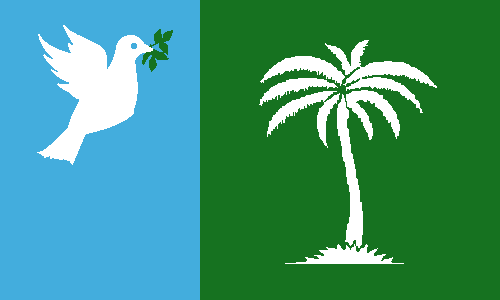

His flag was based on the flag of the Kingdom of Fiji before it became a colony, with the palm tree coming from the coat of arms and rugby logo:
I was also inspired by the old flag, however I chose two different symbols for Fiji, the canoe from the coat of arms (which may also be changed) and the Tabua (Whale tooth) an important cultural item.


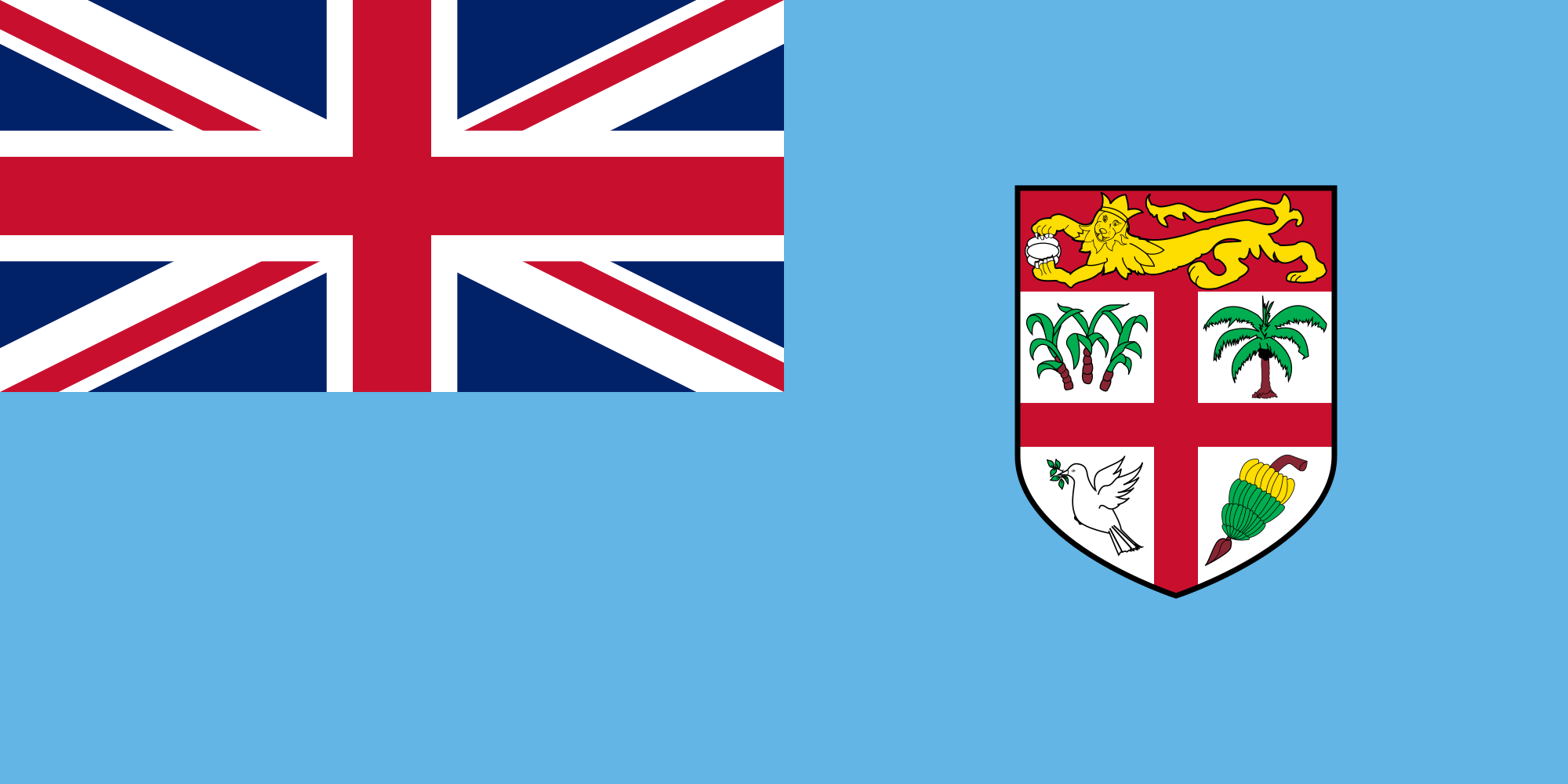 |
| The current Fiji flag |
and this

 |
| flag of Fiji 1871-1874 |
The same basic flag as the Kingdom but with different symbols. My final design is horizontal and features the red white and blue colours of the first Fijian flag, with the Tabua as the central device.
I think the Tabua only on a horizontal design is much less messy, and this way most of the flag is on a blue field, which is in keeping with the lyrics of the national anthem "As we stand united under noble banner blue."
Alternatively the canoe could be used, but from what I understand (which admittedly isn't much) the Tabua seems to be more relevant in modern Fijian culture.
Sunday, 1 February 2015
77 Brigade (British Army)
This post is about possible insignia for the Army's 77 Brigade, which is a new unit that will formally be raised in April. This is a specialist unit that will use psychological operations and social media to help fight in "the information age." No doubt a response to the impact social media is having on the current conflicts in Ukraine and the Middle East. Now its not a specialist corps (like the Engineers, Medics, Logistics etc) so it won't have a cap badge, however as a brigade it will have an arm patch (known as a Tactical Recognition Flash or TRF in the UK armed forces). In a typical army uniform you will find two TRFs, the one on the right arm is a regiment/corps flash, the one on the left below a Union Flag is a Brigade/Task Group flash. So here is my design for a brigade flash for 77 Brigade:
 Its designed to look like a computer "mouse" with the number 77 on it. The "77" is upside down and the two digits are facing each other, this is a reference to the cursor arrow that you are probably looking at right now. The colours have no real meaning and were chosen for their distinctiveness.
I also read that although an army brigade, under army command that will fit into the army structure, it will also include personnel from the Royal Navy, Royal Air Force and civilian services, This got me thinking and perhaps my imagination ran away with me on this one, but perhaps this unit could be the forerunner to a fourth armed service. I know it sounds far fetched but lets look at history;
100 years ago wars were begging to be fought in the sky as well as on land and sea, both the army and navy had airbourne branches in their structure, but it wasn't until 1918, the last months of WW1 that the Royal Air Force was formed.
As the air became a new theater of conflict back then, cyberspace and the internet has become a new theater of conflict in the present, that as demonstrated by cyber attack allegedly by North Korea on US and South Korean companies show, some nations are already using.
So if a new branch of the armed forces is set up for online warfare, a cyber corps, what will be its insignia? This is my idea:

I also read that although an army brigade, under army command that will fit into the army structure, it will also include personnel from the Royal Navy, Royal Air Force and civilian services, This got me thinking and perhaps my imagination ran away with me on this one, but perhaps this unit could be the forerunner to a fourth armed service. I know it sounds far fetched but lets look at history;
100 years ago wars were begging to be fought in the sky as well as on land and sea, both the army and navy had airbourne branches in their structure, but it wasn't until 1918, the last months of WW1 that the Royal Air Force was formed.
As the air became a new theater of conflict back then, cyberspace and the internet has become a new theater of conflict in the present, that as demonstrated by cyber attack allegedly by North Korea on US and South Korean companies show, some nations are already using.
So if a new branch of the armed forces is set up for online warfare, a cyber corps, what will be its insignia? This is my idea:
It features two crossed swords, and a torch, piercing a globe, This is flanked on each side by two old fashion feather quills, joined by a lock. The motto "Vigorous and Vigilant" is on scroll which stretches from the top corner of the dexter quill to the top corner of the sinister quill. This is all topped by a St Edwards Crown, the current crown of state.
The torch signifies truth and knowledge, it is also often associated with signals and communication in military heraldry, aspects of which would certainly be used in this service. The quills symbolise communication through the written (or typed) word, the swords represents military endeavor. The globe symbolises the World Wide Web, and the lock symbolises security.
But as I said perhaps my imagination ran away with me a little, but still I enjoyed making the badge, hopefully the quills don't make it look too much like a New Zealand army unit.
Saturday, 24 January 2015
Development & History of Irish flags Pt10: Union Jacks & Green Harp Jacks
 |
Irish Defence Forces ship flying Irish Naval Jack
and UK courtesy flag in Londonderry 2014
|
This post looks in brief at the national flags of Ireland used in the 19th and early 20th Centuries. Following the rising of 1798, the parliaments of Ireland and Great Britain were united. The Kingdom of Ireland, ceased to exist and the island was now part of the United Kingdom of Great Britain and Ireland. Officially the national flag of Ireland was like the rest of the UK the Union Flag (or Union Jack) now with a St Patrick's Saltire representing the Irish part of the Union. However for many the spirit of the rebellion was still fresh in their mind, and the green flag with a gold harp, the flag used by the rebels, was used as a defacto Irish flag. This "Irish Jack" continued to be used by some Irish people as their flag at home and abroad, and only ceased to be the prime flag after the Easter Rising of 1916. The first picture of this post is of the LÉ Róisin docked in Londonderry last year. I took this picture when the ship along with HMS Severn visited the city as part of its annual maritime festival. This picture is particularly interesting as the Róisin is flying the two flags this post is about. The green harp flag, which is the Naval Jack of the Irish Defence Forces, and the Union Jack, which is in the role of a courtesy flag as Derry is a Northern Ireland city (although according to Queen's Regulations, the white ensign is the correct courtesy flag for a warship visiting the UK). A rather rare occasion when both flags were seen alongside each other.
The Union Jack
 |
| Original Union Flag of James I combining the English & Scottish banners |
The original Union Flag combines the Cross of St George with that of St Andrew and was introduced in 1606 by King James I/VI to be used on Scottish and English (and by extension Irish) ships, following the union of the crowns. However it was a maritime flag and rarely used on land. It is probably the maritime use of the flag that the information board is mistaken about.
.svg/2000px-Flag_of_the_Commonwealth_(1658-1660).svg.png) |
| Protectorate Jack 1658-1660, with Irish harp in centre |

.svg/2000px-Flag_of_the_Commonwealth_(1649-1651).svg.png)
As already mentioned in part 8 the Union Jack was used by Irish regiments both regulars and militia, throughout the 18th Century.
 |
| The Union Flag of 1801, with the addition of St Patrick's Saltire, the current UK flag |
It should be noted that while Irishmen and women took the green flag with them all over the world, they also helped take the Union Jack to all corners of the world. A good example is when British sovereignty was re-established on the Falkland Islands in 1833, it was an Irishman, William Dickson who was appointed as the permanent British representative. Dickson who was of Irish origin came to the islands from Argentina, and was provided with a flag and flag pole, and given the duty of flying the British flag from the flag pole, whenever a ship was in harbour.
 |
| George IV entering Dublin |
 |
| Standard of Lord Lieutenant of Ireland 1801-1921 |
 |
| Flag of the Governor of Northern Ireland 1922-73 |
The ordinary Union Jack continued to be used as the national flag in Ulster, as Northern Ireland remained a constitutional part of the United Kingdom after 1921, and remains so to this day. The Union Jack like most flags in NI is often seen and used as a party emblem, or Unionist symbol as well as the national flag. It is often among the "unauthorised" flags used to "mark territory" by being flown from street furniture. The Union Jack in the Northern Ireland context has been in the media glare recently, due to the Protests of 2013 and 2014. This was as a result of Belfast City Council restricting the number of days it flies the flag, on public buildings including city hall. Many people responded to this with mass protests, not just in Belfast but all over the province. It was seen as the "last straw" in what many saw was the slowly but steady, one small step at a time attempt to eradicate their culture, identity and any symbol of NI being part of the UK, It should be said however that while the demonstrations that turned violent were broadcast all over the world, the majority although perhaps disruptive were peaceful.
 |
| Union Flag Protest in Derry 2013 |
Community relations haven't been the same since 2012. The fact that some councils in NI fly the flag daily, others on designated days and some don't use it at all, is a sad reflection on the lack of constructive, progressive and open flag strategy in N.Ireland.
The most recent controversy is that the flag will not appear on NI driving license but will appear on those of England, Scotland and Wales.
The Union Jack is the only official national flag of Northern Ireland
The Union Jack is the only official national flag of Northern Ireland
For more on the national flag of the United Kingdom click here.
The "Irish Jack"
 |
| Jack of the Irish Defence Forces' Naval Service |
After 1642 this flag seems to have practically disappeared. Although many of the Volunteer flags some of them green, featured harps as their central badges, it is possibly these flags that inspired those of the United Irishmen rather than a continuation of 1641.
Following the Act of Union the green flags of all sorts were used by the followers of O'Connell seeking repeal of the Union, none more so than the green harp flag, but flags with political slogans were also popular. One flag at one of the "monster meetings" of 1843 featured the national device below which was the word "Independence." The harp was sometimes accompanied by an "antique" crown. Its important to note that many nationalist only wanted Ireland to regain its status as an independent kingdom, with its own parliament rather than an separate republic. This is reflected by the crown, many more radical flags dropped the crown and this became standard as time went on.
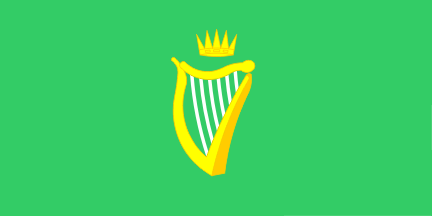 |
| An Irish flag captured in South Africa in 1900 |
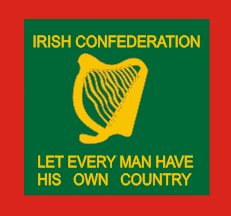 Another flag that appeared in England at the same time was a green flag. This was borne by the Irish of London at a demonstration in 1848. It was a green flag with a red boarder. Above a harp was the inscription "Irish Confederation" and below it "Let every man have his own country." The club was part of the "Young Ireland" movement. This was one of many political harp flags borne at political meetings throughout the 1840s. When the Dublin Young Ireland movement attempted an uprising, they were led to their rendezvous by a flag and fife and drums. This uprising was little more than a skirmish with the police, and failed to capture the imagination of the Irish people as such very few flags apart from the ones mentioned are known to be associated with it. It should also be noted that the Irish Police the soon to be Royal Irish Constabulary wore green, this was recognised by the Young Ireland leader, Meager who when addressing a rally a few days before this uprising said he was glad to see many of his brother Irishmen listening to him wearing green, he was of course talking about the officers of the Irish Constabulary. Although the green uniforms were based on those of the British Army's Rifle regiments this note suggests that many Irishmen saw the police uniform colour as significant. Unfortunately the police of the Republic of Ireland An Garda Síochána (literally translating to Guardians of the Peace) decided to adopt a blue uniform rather than continue the green uniforms of their predecessors. This tradition was carried on by the Royal Ulster Constabulary, and green continues to be worn by the Police Service of Northern Ireland.
 |
| Irish American greeting card |
 |
| Irish flag, according to the Library Atlas of Modern Geography 1892 |
However it was still not without its controversies.
In 1885 during the early days of the Home Rule debates, an effort was made to reignite the radicalism of the green harp flag. There was an appending visit to ireland by the Prince of Wales. The the Lord Mayor of Dublin who was a nationalist, said that the moment the Prince arrived on the island, he would take down the flag of Dublin, which had by custom flown over the Mayors residence when he was in residence. This insult offended the students of Trinity College who one night raided the Lord Mayor's garden and stole the flag! The Dublin flag was a heraldic banner of the city's coat of arms, three burning castles on a blue field.
 |
| Flag of the City of Dublin |
In 1906 during the Athens Olympics, Irishman Peter O'Conner, won silver in the long jump. He successfully objected to the raising of the Union Flag in his honour, and a green harp flag provided by some of his supporters was raised instead.
 The 16th (Irish) Division of the 1st World War petitioned to have an official divisional flag. This was a green harp flag with 16th(Irish) Division. This was declined on the grounds that flags were borne by battalions (regimental colours) and not divisions, however green harp flags were used by Irish troops in the Great War. There is a photograph of John Redmond presenting Irish Volunteers with one before they depart for the front. There is also a report of the Connaught Rangers marching behind one in Gallipoli. The story says that they had a green harp flag flying and the pipes and drums playing Killaloe, much to the delight of nearby French troops. A detachment of Foot Guards even presented arms mistaking the flag for a regimental colour!
The acceptance of the green harp flag as the national emblem is demonstrated here, infact had the Easter Rising not happened it could well have been the modern flag of Ireland. The green harp flag was even used in recruitment posters for the army:


The green harp flag has even been the basis of the flags of Irish regiments. The flag of the Ulster Defence Regiment for example is a green harp flag with a central red stripe.
 |
| Flag of the Ulster Defence Regiment 1970-92 |
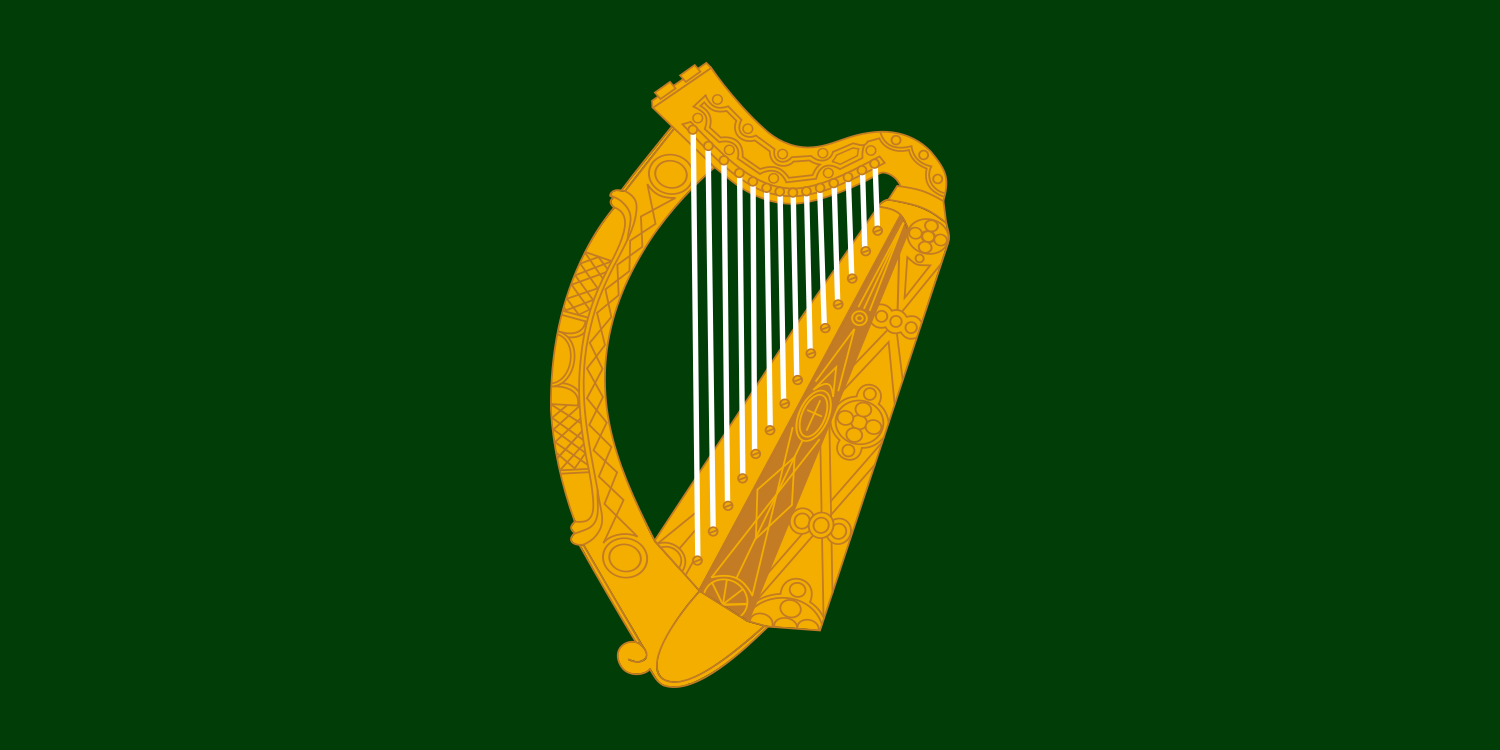 |
| The flag of Leinster |

It should be noted that these are attributed arms, there is no evidence of the 36th Division using them as divisional insignia (although they did appear to use a red hand on white shield), and were probably adopted after the war, for use by those who identified with the division and possibly veterans. It seems appropriate that I end the post here as I started it with the two emblems side by side.
For more in this series see the links below or click the label History of Irish flags:
Also in the Series
Subscribe to:
Posts (Atom)